The sticker price of an air purifier is only the entry fee. The real bill arrives every few months, when the filter you actually breathe through has to be replaced. In a cat household that bill runs higher than the box suggests: cat hair, litter dust and constantly produced ammonia-load the media faster, so carbon saturates sooner than the manufacturer's optimistic interval. Choosing a purifier without checking filter costs is like buying a printer without checking ink.
This guide breaks down how much an air purifier really costs to run per year across the brands in our Pet-Air cluster – what determines the price, how often each type needs replacing, and how to bring the cost down without wrecking performance. We do not print prices, because they change constantly and vary by region; every button below shows the live Amazon price. Figures are manufacturers' published replacement guidance and known filter designs, not hands-on tests.
Why filter cost is the real price of a purifier
An air purifier is a pump with a consumable in it. Over a typical five-year life, a cheap unit with expensive proprietary filters can cost more than a mid-range unit with cheap ones. Three things drive the bill:
- Replacement interval. A cartridge changed twice a year costs twice as much per year as one changed once a year, even at the same unit price.
- What you are replacing. A combined HEPA+carbon cartridge means you throw away good HEPA media when the carbon is spent, and vice versa. Separate stages let you refresh the part that actually wears out.
- OEM vs third-party. Popular brands (Coway, Levoit) have a healthy third-party filter market that competes on price. Proprietary brands (Blueair, IQAir) do not, so you pay the brand's price.
If your goal is odour control specifically, the cost driver is carbon, not HEPA. Carbon saturates as it adsorbs ammonia and sulfur gases, and in a multi-cat home it goes first. Frequent filter changes are the price of a strong odour load – which is why reducing the load with a good odor-control litter and a deodorizer is as much a cost-saving move as a comfort one.
What drives replacement cost
- Combined vs separate stages. Coway's Mighty uses a single combined cartridge plus a washable pre-filter; IQAir stacks a washable pre-filter, a separate gas/odour cartridge and a long-life HyperHEPA filter. Fewer, longer-life stages usually mean lower cost per year.
- Washable pre-filters. A washable pre-filter catches hair and litter dust that would otherwise load the main media. Clean it every 2–4 weeks and it can extend cartridge life substantially – the single easiest way to cut cost in a cat home.
- The cat factor. Shedding, litter dust and odour all shorten filter life. Expect the shorter end of any interval range if you have multiple cats or a dusty litter.
- Filter availability. A brand sold widely on Amazon tends to have cheap, in-stock filters. Niche brands can mean pricier, slower-to-find replacements.
Filter cost per year by brand and model
The table below frames running cost honestly: cost per year = filter price ÷ interval in years. Because prices vary, we grade the running-cost tier rather than printing numbers, and list the typical manufacturer interval.
| Model | Replaceable parts | Typical interval | Sets / year | Filter availability | Running-cost tier |
|---|---|---|---|---|---|
| Coway AP-1512HH Mighty | Combined True HEPA + carbon cartridge; washable pre-filter | ~12 months | ~1 | Wide (OEM + third-party) | Low–Medium |
| Levoit Core 300-P | 3-in-1 cartridge (nylon + carbon + HEPA); Pet Allergy variant | 6–8 months | ~1.5–2 | Wide, inexpensive | Low |
| Levoit Core 200S-P | 3-in-1 cartridge (nylon + carbon + HEPA) | 6–8 months | ~1.5–2 | Wide, inexpensive | Low |
| Coway Airmega 100 | Combined True HEPA + deodorization cartridge | ~12 months | ~1 | Wide | Low–Medium |
| Blueair Blue Pure 511 | Combined HEPASilent cartridge; washable pre-filter | 6–12 months | ~1–2 | Proprietary (Blueair) | Medium |
| IQAir HealthPro Compact XE | Washable pre-filter; V5-Cell gas/odour cartridge; HyperHEPA filter | pre-filter months · gas ~2 yrs · HEPA ~4 yrs | <1 equivalent | IQAir only | Premium upfront, long intervals |
Intervals are typical manufacturer guidance and vary with use; a multi-cat, high-dust home usually shifts them to the shorter end. We do not print currency figures because prices change and differ by region – use the links for live pricing.
Reorder table: what to buy and when
Match the replacement to the model and buy before the filter looks dirty – by the time airflow drops or odour returns, the carbon is already spent. Buttons open the product page, where the matching replacement filter is listed.
| Model | Replacement to buy | When | Link |
|---|---|---|---|
| Coway AP-1512HH Mighty | AP-1512HH combined HEPA + carbon cartridge (wash pre-filter every 2–4 wks) | ~every 12 months | Check Price |
| Levoit Core 300-P | Core 300 3-in-1 filter (or Pet Allergy version) | every 6–8 months | Check Price |
| Levoit Core 200S-P | Core 200S 3-in-1 filter | every 6–8 months | Check Price |
| Coway Airmega 100 | Airmega 100 combined HEPA + deodorization cartridge | ~every 12 months | Check Price |
| Blueair Blue Pure 511 | Blue Pure 511 HEPASilent cartridge (wash pre-filter regularly) | every 6–12 months | Check Price |
| IQAir HealthPro Compact XE | PreMax pre-filter; V5-Cell gas/odour cartridge; HyperHEPA filter | staged – see intervals above | Check Price |
Filter names match the manufacturers' own part descriptions. The buttons open each purifier's product page, where the matching replacement filter is listed for the current price.
The purifiers this cost guide covers
Coway AP-1512HH Mighty Air Purifier
Best Overall Value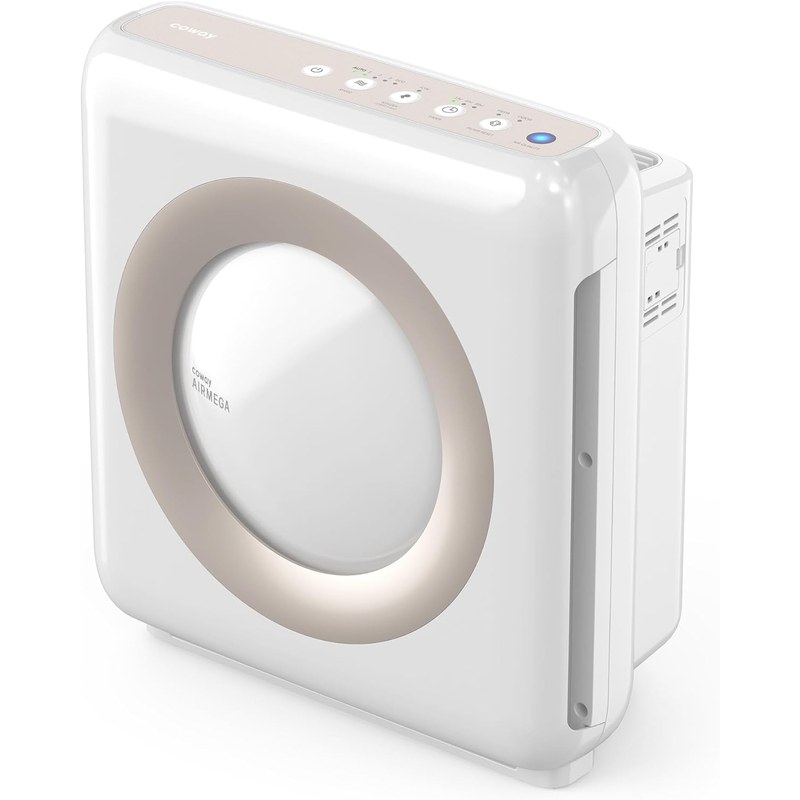
★ 4.6/5 from 29,186 verified Amazon reviews. The Mighty is the running-cost sweet spot: one inexpensive combined cartridge a year, plus a washable pre-filter you simply rinse every few weeks. Wide third-party filter availability keeps prices competitive, and the carbon/deodorization stage means the replacement you are buying actually fights odour, not just dust.
- Pros
- One cartridge a year; washable pre-filter
- Wide, low-cost filter supply
- True HEPA + carbon for odour
- 29,000+ reviews at 4.6 stars
- Cons
- Combined filter discards HEPA when carbon is spent
- No app
Levoit Core 300-P Air Purifier
Lowest Running Cost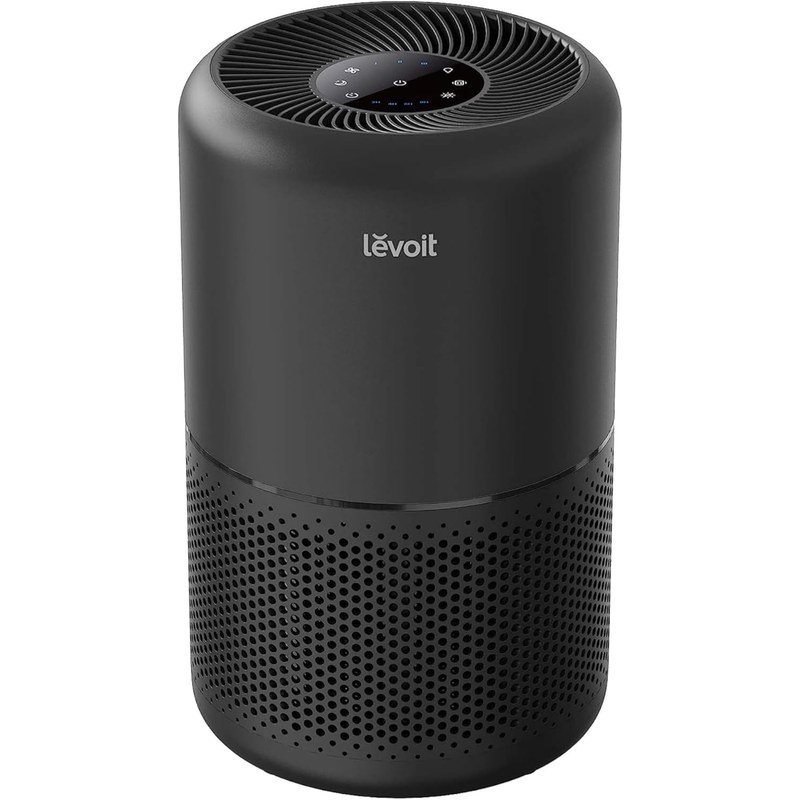
★ 4.7/5 from 108,978 verified Amazon reviews. Levoit filters are among the cheapest and most widely stocked in the category, so even at a 6–8 month interval the cost per year stays low. The 3-in-1 cartridge bundles the pre-filter, carbon and HEPA in one part, and a Pet Allergy variant trades some airflow for stronger odour and dander capture when you need it.
- Pros
- Very inexpensive, widely available filters
- Swappable Pet Allergy variant
- 24 dB sleep mode
- 108,000+ reviews at 4.7 stars
- Cons
- Replace roughly twice a year
- Combined cartridge
Coway Airmega 100 Air Purifier
Best for Bedrooms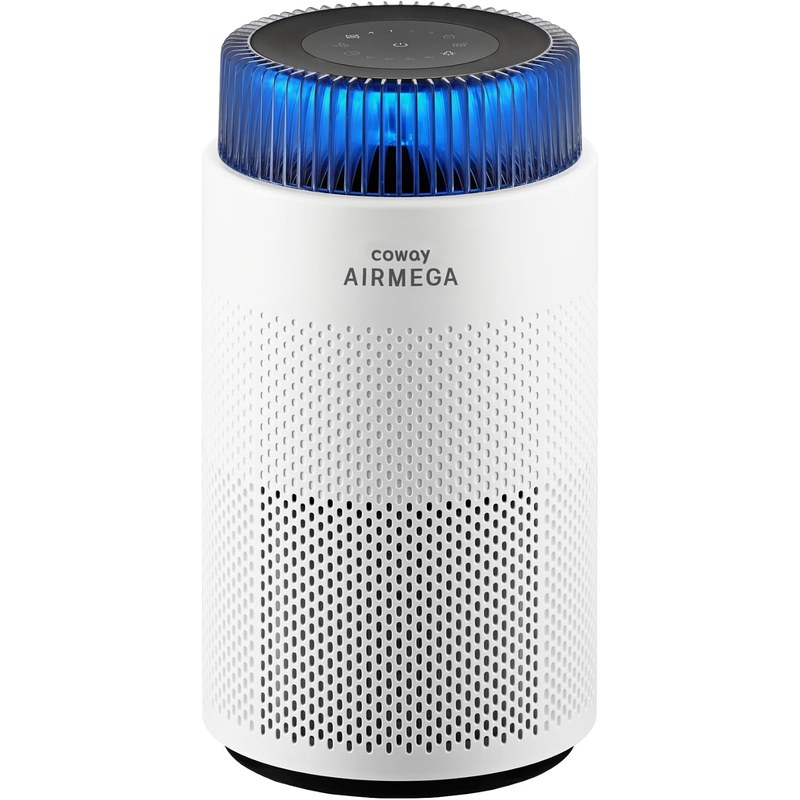
★ 4.4/5 from 832 verified Amazon reviews. A tidy bedroom unit with the same one-cartridge-a-year economics as the Mighty: a combined True HEPA + deodorization filter plus auto and sleep modes. Fewer, cheaper replacements and a simple design make it a low-hassle ownership proposition for a small room.
- Pros
- One cartridge a year
- Auto + sleep mode
- Compact and simple
- True HEPA 99.97% @0.3 µm
- Cons
- ~800 reviews
- No app control
Blueair Blue Pure 511 Air Purifier
Best Compact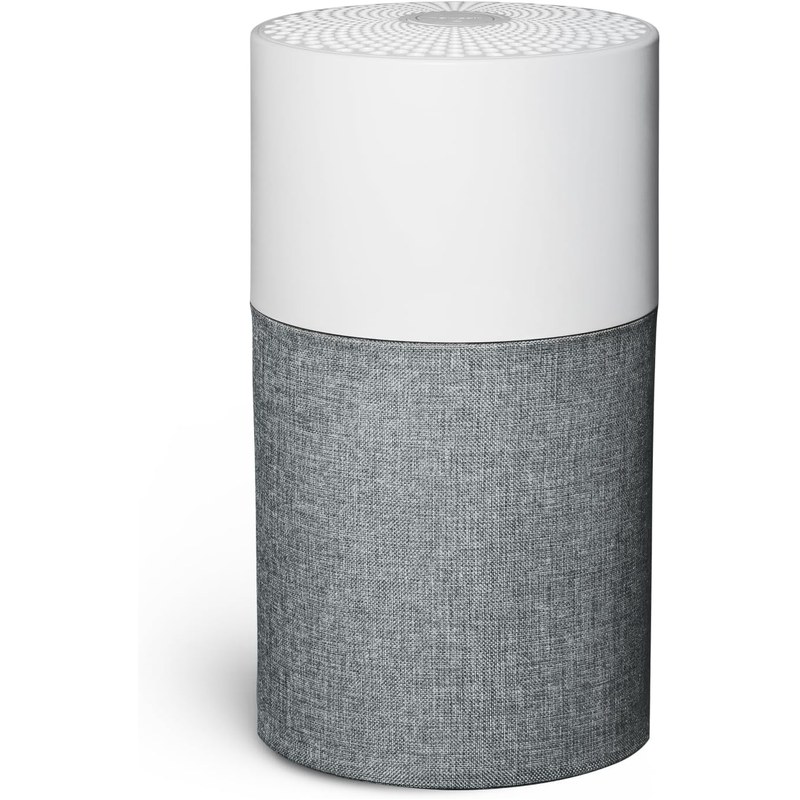
★ 4.4/5 from 3,371 verified Amazon reviews. The 511's filter is proprietary, so expect to pay a bit more per cartridge than a Levoit – but the washable fabric pre-filter is free to maintain and the interval can stretch to a year in a single-cat home. Compact, quiet (24 dB low) and Energy Star Most Efficient, it is a good small-flat unit as long as you budget for branded filters.
- Pros
- Washable pre-filter cuts main-filter load
- Compact and quiet (24 dB low)
- Energy Star Most Efficient
- 3,300+ reviews at 4.4 stars
- Cons
- Proprietary filter – no third-party option
- Lighter carbon for heavy odour
IQAir HealthPro Compact XE Air Purifier
Premium, Long Intervals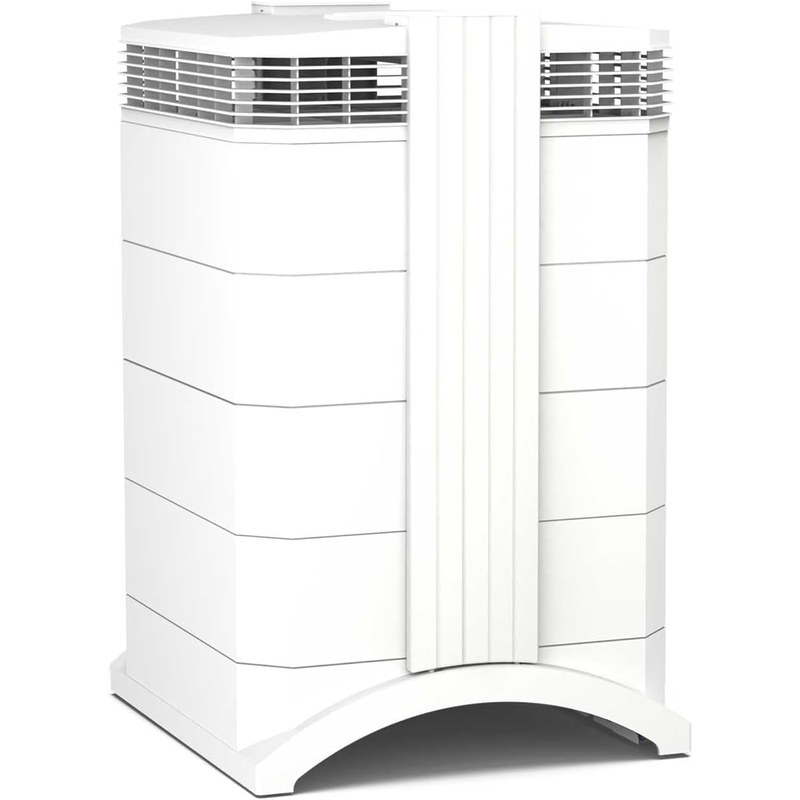
★ 4.3/5 from 1,500+ verified Amazon reviews. IQAir inverts the usual maths: the unit is the most expensive here, but it splits filtration into a washable pre-filter, a separate gas/odour cartridge and a long-life HyperHEPA filter that can run for years. You refresh the cheap parts often and the expensive ones rarely, which can make cost per year competitive despite the premium price – and it is the strongest odour design if money is not the constraint.
- Pros
- Separate stages – replace only what wears out
- Gas cartridge and HyperHEPA last years
- HyperHEPA to 0.003 microns
- Swiss-made; 10-year limited warranty
- Cons
- Highest upfront price
- Proprietary cartridges; pricier per change
Blueair Blue Pure 311i Max Air Purifier
Large-Room Option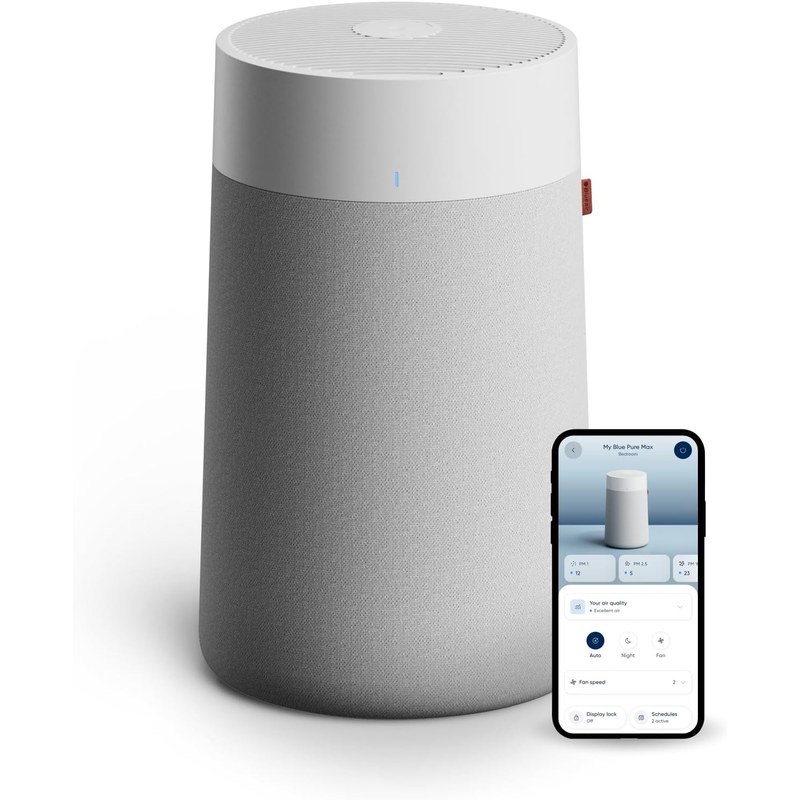
★ 4.5/5 from 2,562 verified Amazon reviews. If the litter box sits in an open-plan space, a bigger unit spreads the cost over more air: the 311i Max cleans up to 2,107 sq ft in an hour and still only needs a combined HEPASilent cartridge once or twice a year, with a washable pre-filter in between. Like the 511, the filter is proprietary, so factor branded-cartridge prices into your running-cost estimate.
- Pros
- Very large coverage per filter
- Washable pre-filter; Wi-Fi app
- Quiet (23–50 dB)
- 2,500+ reviews at 4.5 stars
- Cons
- Proprietary filter
- Bigger footprint for a small flat
How to cut filter cost without losing performance
- Wash the pre-filter every 2–4 weeks. A clean pre-filter keeps hair and litter dust off the carbon and HEPA, which is the single biggest lever on cartridge life in a cat home.
- Vacuum the outer wrap of the cartridge gently (if the manufacturer allows) to remove surface dust between changes.
- Reduce the odour load. Daily scooping (see the litter box guide), an odor-control litter and a deodorizer mean less ammonia for the carbon to adsorb, so it lasts longer.
- Do not change filters early out of habit. Follow airflow and odour, not the calendar – but do not stretch a filter past the point where odour returns, or you are just recirculating it.
- Weigh OEM against third-party. Coway and Levoit have reliable third-party options; for proprietary brands, the OEM filter is usually the only choice. Check reviews before buying a cheap clone.
- Run auto mode. A unit that ramps up only when air quality drops spins its media less than one left on maximum, extending life.
For the pick that best balances purchase price against running cost for a litter-box room, see the best air purifiers for cat litter odor. If allergies rather than odour are the priority, the best purifiers for cat allergies and our dander explainer cover the filtration side.
FAQ
How much does it cost per year to run an air purifier?
Work it out as cost per year = filter price ÷ replacement interval in years, then add any pre-filters. As a rule, Levoit and Coway sit at the low end with cheap, widely available filters; Blueair is mid because its cartridges are proprietary; IQAir is premium upfront but replaces cheap parts often and expensive filters rarely, which can keep the annual figure reasonable.
How often should I replace a HEPA and carbon filter with cats?
Follow the manufacturer as a baseline – commonly about every 12 months for combined Coway cartridges and 6–8 months for Levoit's – then shorten it for a multi-cat, high-dust home. Odour returning or reduced airflow are the practical signals that the carbon or media is spent.
Does a washable pre-filter really save money?
Yes. Rinsing a washable pre-filter every 2–4 weeks keeps cat hair and litter dust off the main carbon and HEPA media, which is the biggest single factor in how long the cartridge lasts. It is the cheapest maintenance step with the clearest payback.
Are third-party replacement filters safe to use?
They can be, and for brands like Coway and Levoit they are widely used and cheaper. The risk is clones that skimp on carbon or use lower-grade media, so check reviews and favour well-rated filters that explicitly state True HEPA and activated carbon rather than vague 'HEPA-type' wording.
Why does my filter seem to wear out faster than the box says?
Cat households simply load filters harder: shedding, litter dust and continuous ammonia all shorten carbon life. Multiple cats, a dusty litter and running the unit on maximum rather than auto mode all push you to the short end of the recommended interval.
Bottom Line
Judge a purifier by its cost per year, not its cost per filter: divide the filter price by the interval in years, add any pre-filters, and factor in how a multi-cat home shortens that interval. Popular brands with wide third-party supply (Coway, Levoit) keep running costs low; proprietary cartridges (Blueair) cost more per change; and IQAir is expensive upfront but spreads cost across long-life, separately replaced stages.
The cheapest filter bill is the one you never have to pay early – so wash the pre-filter, run auto mode, and reduce the odour load with a good odor-control litter and deodorizer. To match the right unit to your room first, start with the litter-odor roundup and our placement guide.