Bringing a kitten home is mostly logistics, and the list is shorter than the internet suggests. A kitten needs food it can digest, a litter box it can climb into, a safe way to travel, water that moves, and something to scratch that is not your sofa. The rest is optional for the first month.
Below are the seven items we would buy first, chosen for kitten-specific reasons rather than popularity – low entry walls, small carrier dimensions, wide shallow bowls. Each pick rests on published specifications and the Amazon rating count on its listing; we have not tested these products, and the flaws sit next to the praise.
| Item | Best For | Why It Matters | Rating | Link |
|---|---|---|---|---|
| Nutro Wholesome Essentials Kitten | Food | Kitten-specific DHA & calcium | 4.7/5 (2,159) | Check Price |
| IRIS High Sided Litter Box | Litter box | Low entry, high walls | 4.4/5 (32,397) | Check Price |
| ZaneSun Soft-Sided Carrier | Carrier | Fits kittens under 8 lb | 4.6/5 (14,560) | Check Price |
| Tomxcute Steel Fountain | Water | Encourages drinking | 4.3/5 (13,844) | Check Price |
| Necoichi Wide Ceramic Bowl | Bowls | Wide, shallow, elevated | 4.6/5 (3,808) | Check Price |
| Necoichi Scratcher Bowl | Scratcher | Scratch + sleep in one | 4.7/5 (766) | Check Price |
| SPOT Colorful Springs (10-pack) | Toys | Cheap, safe, irresistible | 4.6/5 (31,485) | Check Price |
Why a Kitten Checklist Looks Different From a Cat Checklist
Three things change when the cat is eight weeks old instead of eight years. Kittens are small enough to fit through gaps and over walls, they eat roughly twice as much per pound as adults, and they investigate everything with their mouths. That is why the picks below favour low entry heights, smaller carrier dimensions and toys with no loose parts – not because they are the most popular products in each category.
That is also why you should not scale down adult gear: a 12-inch litter box wall is a hurdle for a kitten, an adult carrier swallows a two-pound kitten, and a deep bowl makes eating awkward. Buy for the cat you have this month, then size up at six months.
How We Selected
We ranked on four things: suitability for a cat under six months (entry height, dimensions, bowl depth), published manufacturer specifications, the Amazon rating count and recurring complaints, and whether the item still works when the kitten is a 12 lb adult.
The 7 Essentials, In Order
Nutro Wholesome Essentials Kitten Chicken & Brown Rice
Best Kitten Food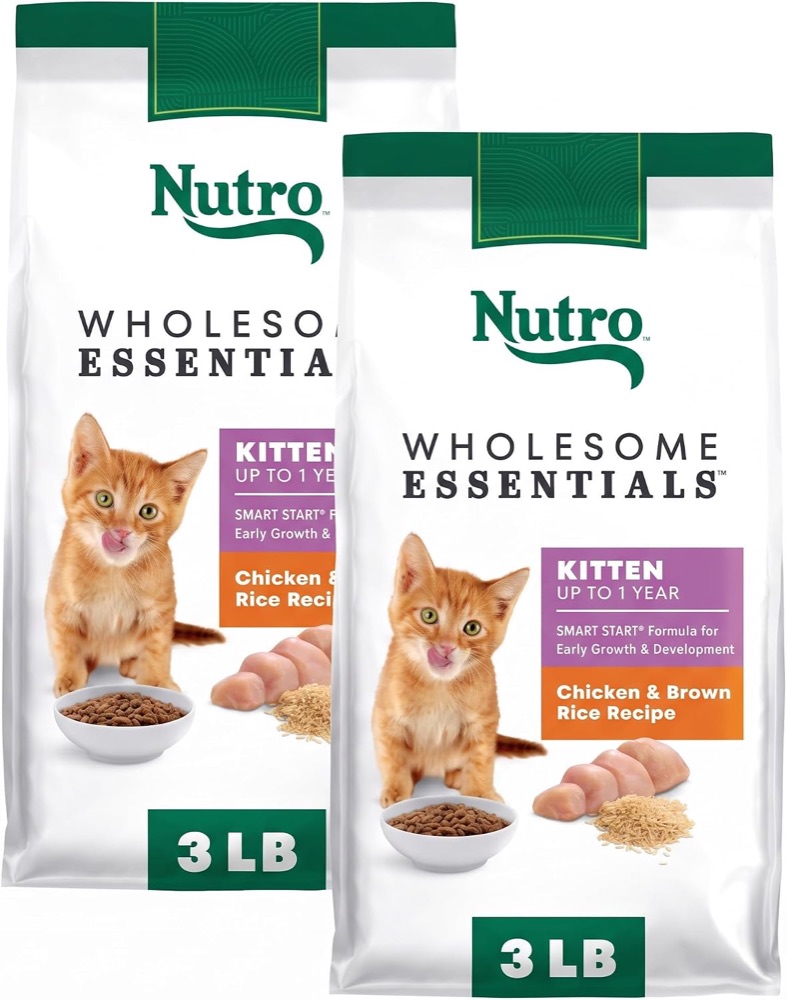
4.7/5 from 2,159 Amazon ratings. Kitten food is not adult food in a smaller bag: growing cats need more calories per pound, plus DHA and calcium. This formula states both on the label, with real chicken first and no corn, wheat or soy protein. The kibble is small enough for a kitten's mouth – a kitten that cannot pick up the kibble simply stops eating. Sold as two 3 lb bags.
- Pros
- Kitten-specific DHA and calcium
- Real chicken first, no by-product meal
- Small kibble size
- Large owner base for a kitten formula
- Cons
- Two 3 lb bags is a lot if you have one small kitten
- Dry only – pair with wet food for moisture
IRIS USA High Sided Litter Box, Large
Best Litter Box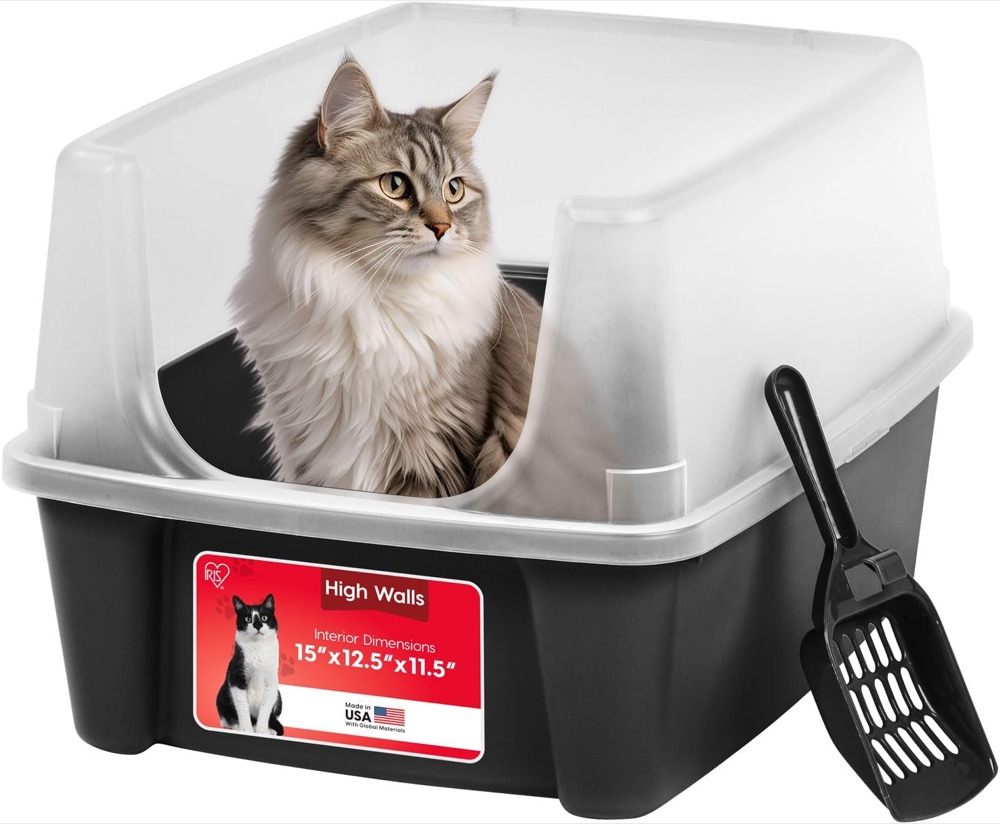
4.4/5 from 32,397 Amazon ratings. The highest-volume product here and the one most likely to still be in use in five years. High walls on three sides stop litter spraying; the open top means a kitten steps in without a door to negotiate, and you can see at a glance whether they used it. At 19 x 15 inches it fits a kitten and an adult, so you will not replace it at six months.
- Pros
- Open top – no door for a kitten to fight
- High walls reduce scatter
- Big enough to last into adulthood
- Very large owner base
- Cons
- No lid, so odour control depends on you scooping
- Not for cats that spray over an 11.75-inch wall
ZaneSun Soft-Sided Cat Carrier (Small)
Best Carrier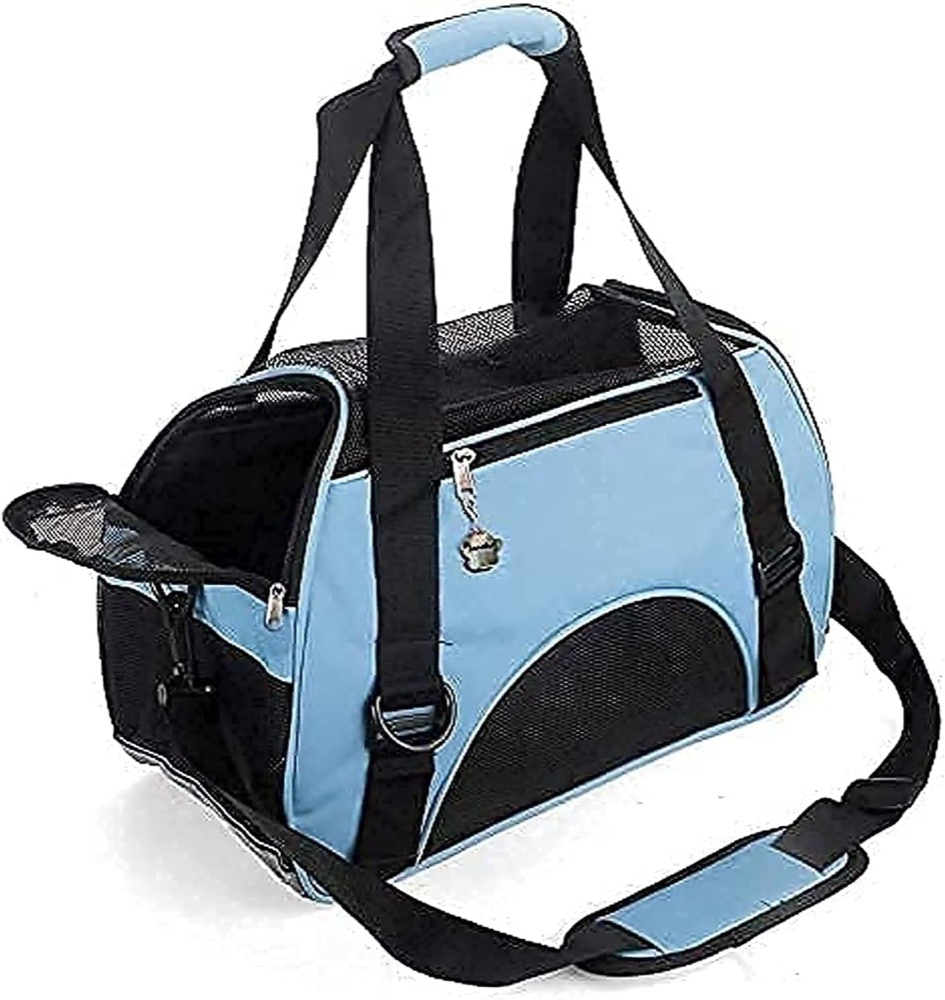
4.6/5 from 14,560 Amazon ratings. For the first vet visits you need something a kitten cannot climb out of and you can carry one-handed. This soft-sided carrier is 15.7 inches long, weighs just over a pound, and is rated for pets under 8 lb – right for a kitten, too small for the adult it becomes. 600D Oxford fabric, removable washable bed, shoulder strap. Leave it open in the room for a week so it becomes furniture, not a trap.
- Pros
- Right size for a kitten, not an adult
- Light enough to carry with one hand
- Removable, washable interior pad
- Folds flat for storage
- Cons
- Outgrown at around 8 lb
- Soft sides offer less protection in a car than a hard crate
Tomxcute Stainless Steel Water Fountain (108 oz)
Best Fountain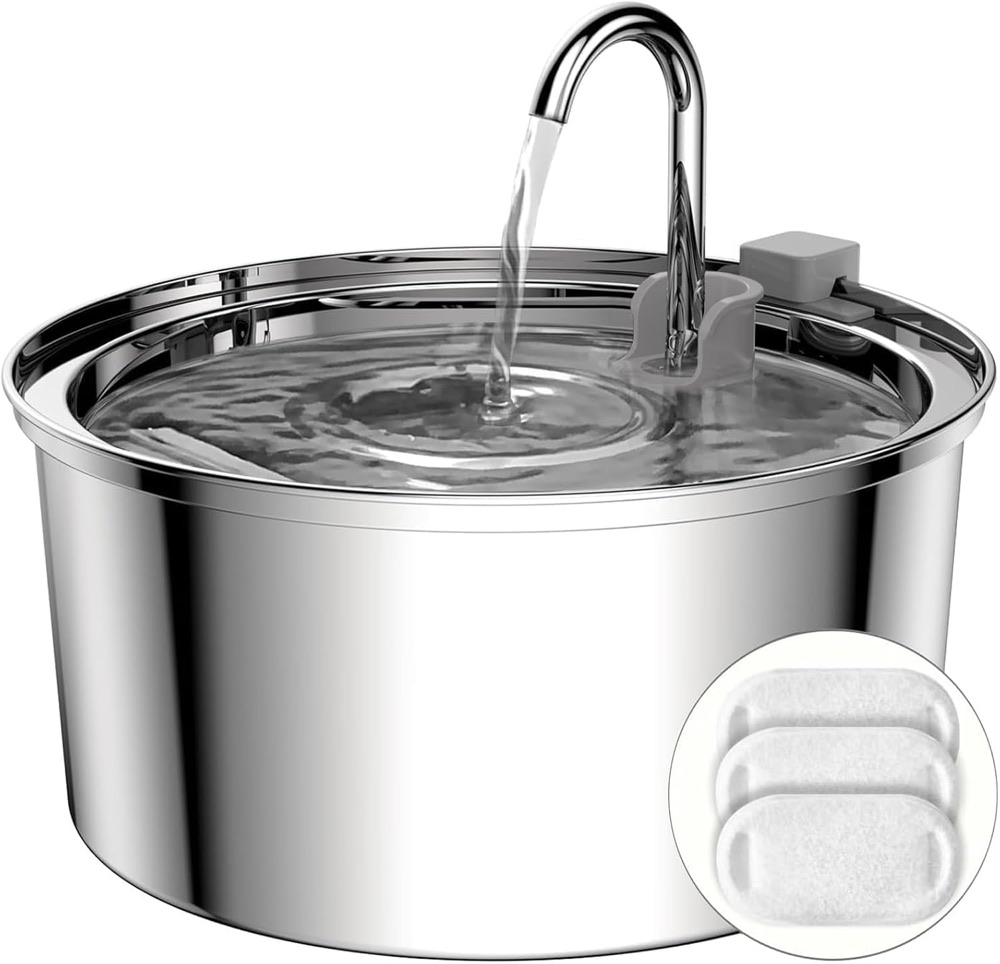
4.3/5 from 13,844 Amazon ratings. Kittens are bad at drinking enough, and moving water gets many of them to drink more than a static bowl does. This fountain holds 108 oz in a 304 stainless body – steel resists the biofilm that builds up on plastic – and the 5V pump is rated at 25 dB or less for kittens that startle at noise. The pump carries a lifetime warranty. Clean weekly, swap the filter monthly.
- Pros
- Stainless steel, not plastic
- Large 3.2 L reservoir
- Quiet pump, rated ≤25 dB
- Lifetime pump warranty from the maker
- Cons
- Needs monthly filter changes and weekly cleaning
- Corded – placement depends on an outlet
Necoichi Extra-Wide Elevated Ceramic Bowl
Best Bowl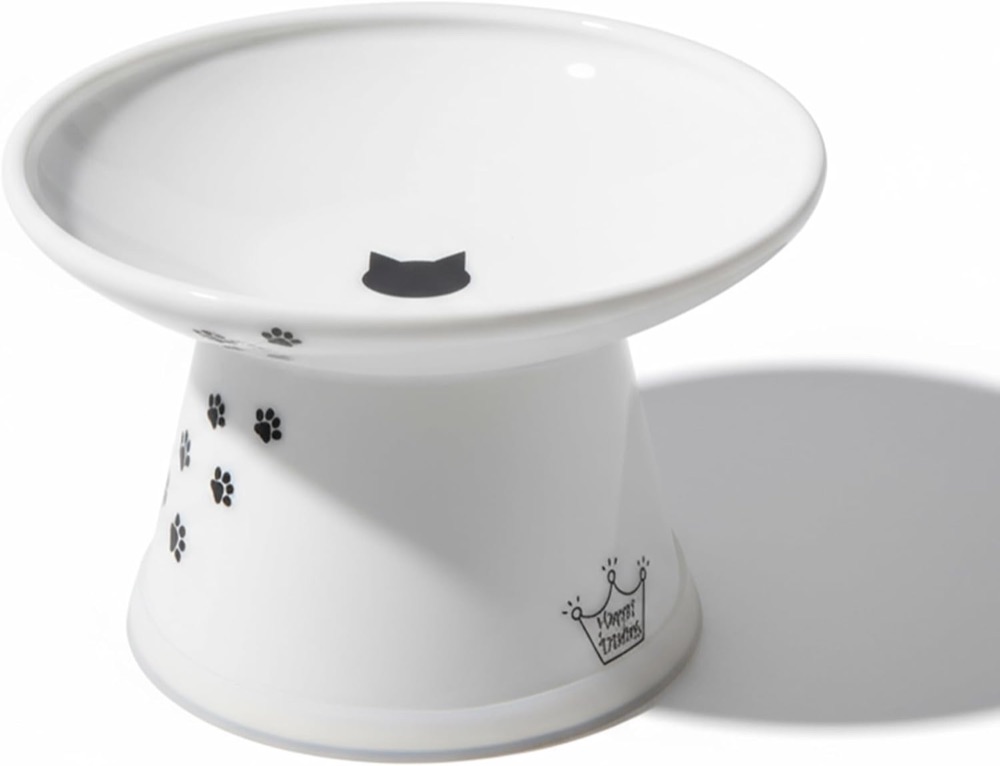
4.6/5 from 3,808 Amazon ratings. A wide, shallow, slightly raised bowl solves three kitten problems at once: whiskers do not touch the sides, the neck is not bent to floor level, and food does not pile up where a small muzzle cannot reach. The porcelain is lead- and cadmium-free, dishwasher-safe and heavy enough (1.2 lb) that a kitten cannot push it around. Buy two – food and water.
- Pros
- Wide and shallow – easier for small muzzles
- Elevated to reduce neck strain
- Heavy enough not to slide
- Dishwasher and microwave safe
- Cons
- Porcelain can chip if dropped
- Only one bowl per box
Necoichi Cat Scratcher Bowl
Best Scratcher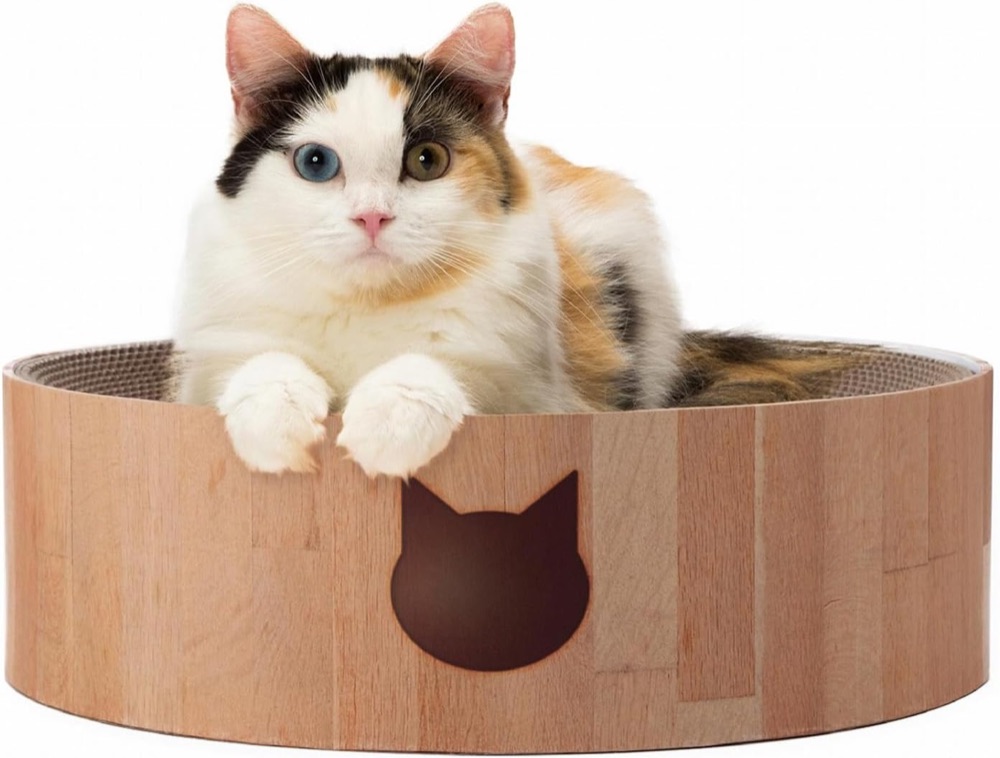
4.7/5 from 766 Amazon ratings. The highest-rated item here, and the one that solves scratching before it starts. A curved cardboard lounger with a replaceable, reversible scratch pad, so a kitten can stretch, dig and then fall asleep in the same object. Put it next to wherever the kitten already scratches – usually the sofa – not in an unused corner.
- Pros
- Scratch surface and bed in one
- Reversible, replaceable pad
- 100% recycled paper
- Highest rating in this guide
- Cons
- Cardboard sheds debris over time
- Small – a large adult cat will outgrow the lounger
SPOT Colorful Springs Cat Toys (10-Pack)
Best Toy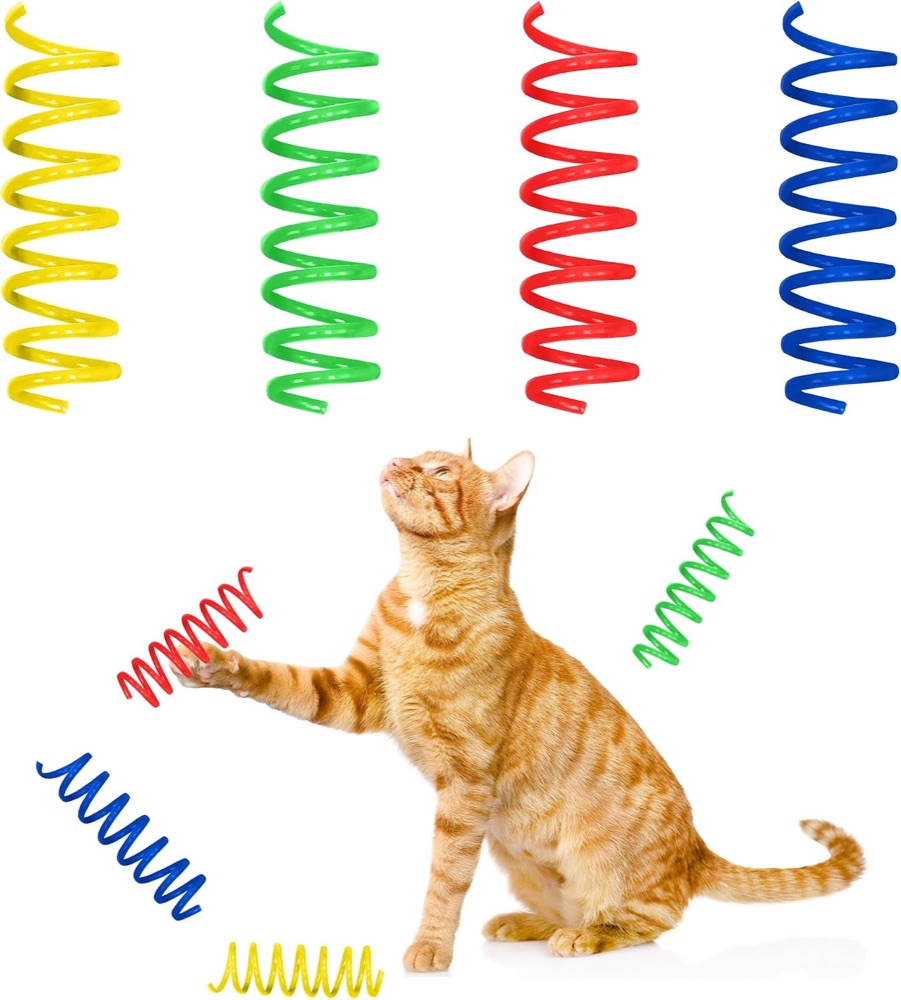
4.6/5 from 31,485 Amazon ratings. The cheapest item here and the one kittens play with longest. A 3-inch plastic coil bounces unpredictably, can be batted one-handed, and is light enough to carry in a kitten's mouth. No catnip, no feathers, no glued-on parts to swallow – exactly what you want for a cat that chews everything. Ten per pack because they end up under the sofa.
- Pros
- No small detachable parts
- Bounces unpredictably – holds attention
- Ten per pack, so losing a few does not matter
- Very large owner base
- Cons
- Plastic, not a natural material
- Easy to lose under furniture
| Item | Category | Key spec | Rating | Still useful at 1 year? |
|---|---|---|---|---|
| Nutro Kitten Chicken & Rice | Food | DHA + calcium | 4.7 (2,159) | No – switch to adult food |
| IRIS High Sided Litter Box | Litter box | 19 x 15 x 11.75 in | 4.4 (32,397) | Yes |
| ZaneSun Soft Carrier | Carrier | 15.7 in, under 8 lb | 4.6 (14,560) | No – size up |
| Tomxcute Fountain | Water | 108 oz, stainless | 4.3 (13,844) | Yes |
| Necoichi Wide Bowl | Bowls | 6.1 x 4.13 in, raised | 4.6 (3,808) | Yes |
| Necoichi Scratcher Bowl | Scratcher | Reversible pad | 4.7 (766) | Pad replaceable |
| SPOT Springs | Toys | 10-pack, 3 in | 4.6 (31,485) | Yes |
Rating counts are the number of Amazon ratings shown on each listing on 27 October 2026.
The First 48 Hours
Set the carrier down in one small room and open it – do not carry the kitten out. Put litter box, food, water and scratcher within a few feet of each other; a kitten that must cross a house to find a toilet uses the carpet. Keep the room quiet, sit on the floor, and let the kitten come to you.
Expect one skipped meal and a hiding spot; both are normal. What is not: no food or litter box use in 24 hours, diarrhoea, or lethargy. Call a vet the same day – kittens decompensate faster than adult cats.
What You Can Skip (For Now)
- A cat tree over 40 inches. Buy short and sturdy now; a tall tower is a fall risk for a clumsy kitten. Upgrade at six months – see our cat trees for kittens guide.
- An automatic feeder. Kittens need measured, frequent meals and a person checking that they are eating.
- Clumping litter for the first weeks. Kittens taste everything; a non-clumping litter is the safer default until you know they are not eating it.
Where to Spend and Where to Save
Spend on health and safety: kitten food, a correctly sized litter box, a carrier, and a vet visit within 72 hours. Save on toys – ten springs outperform most battery gadgets – and on beds, because a kitten will sleep in the box the carrier came in.
Frequently Asked Questions
What do I actually need before a kitten comes home?
Kitten food, a litter box with low entry walls, litter, a carrier, two shallow bowls and something to scratch. That is a complete setup for month one. A fountain, bed and cat tree can wait until you know the kitten's habits.
How many litter boxes does one kitten need?
One box per cat plus one spare is the standard rule, but one box is enough to start in a small apartment – scoop daily, keep it away from food, and add a second box if the kitten eliminates outside it.
Can a kitten eat adult cat food?
Not ideally. Kitten food is denser in calories, protein, calcium and DHA, all of which matter in the first year. Adult food will not poison a kitten but will not support growth as well. Switch at around 12 months, or when your vet advises it.
When should the first vet visit happen?
Within 72 hours of bringing the kitten home. The visit covers a physical exam, faecal test, worming and the first vaccinations. Bring a stool sample if you can; it saves a second trip.
Bottom Line
Buy the Nutro kitten food, the IRIS high-sided litter box and the ZaneSun carrier first – those three cover the things a kitten cannot safely go without. Add the Tomxcute fountain and the Necoichi wide bowl if your kitten is a reluctant drinker or a messy eater, and the Necoichi scratcher bowl plus a pack of SPOT springs to redirect claws and energy before habits form.
Everything else can wait. A kitten's first month is about routine, warmth and food – not gear.