The first year of your kitten's life determines their lifelong health – and nutrition is the biggest lever. Kitten food isn't just "smaller adult food": it's formulated with extra calories, protein and DHA for rapid growth and brain development.
We compared the most popular kitten foods of 2026: growth-specific nutrition (DHA, protein density), ingredient quality, and owner satisfaction across 54,000+ verified reviews. These are the formulas we'd feed our own kittens.
| Product | Key Benefit | Price | Link |
|---|---|---|---|
| Purina ONE Kitten Dry | Best Overall | $17.97 | Check Price |
| Fancy Feast Wet Kitten Variety | Best Wet | $22.86 | Check Price |
| Open Farm Kitten Bundle | Best Organic | $33.74 | Check Price |
What Makes Kitten Food Different
Kittens grow faster than any other life stage – up to 15x their birth weight in the first year. That growth needs:
- More calories: kitten formulas are denser, roughly 350–450 kcal per cup vs. ~300 for adult food
- More protein: ~35–40% for muscle and organ development
- DHA: an omega-3 fatty acid critical for brain and vision development
- Calcium & phosphorus: in the right ratio for growing bones
That's why adult food won't cut it: it lacks the nutrient density kittens need, and portion sizes get confusing fast.
How We Selected & Compared
- Kitten-specific formulation: DHA, protein density, calcium-phosphorus balance
- Ingredients: named protein first, no unnamed by-products, no artificial colors
- Owner satisfaction: aggregated ratings from 54,000+ verified Amazon reviews
- Format coverage: dry for convenience, wet for hydration, organic for clean sourcing
The 3 Best Kitten Foods
Purina ONE High Protein Natural Kitten Dry
Best Overall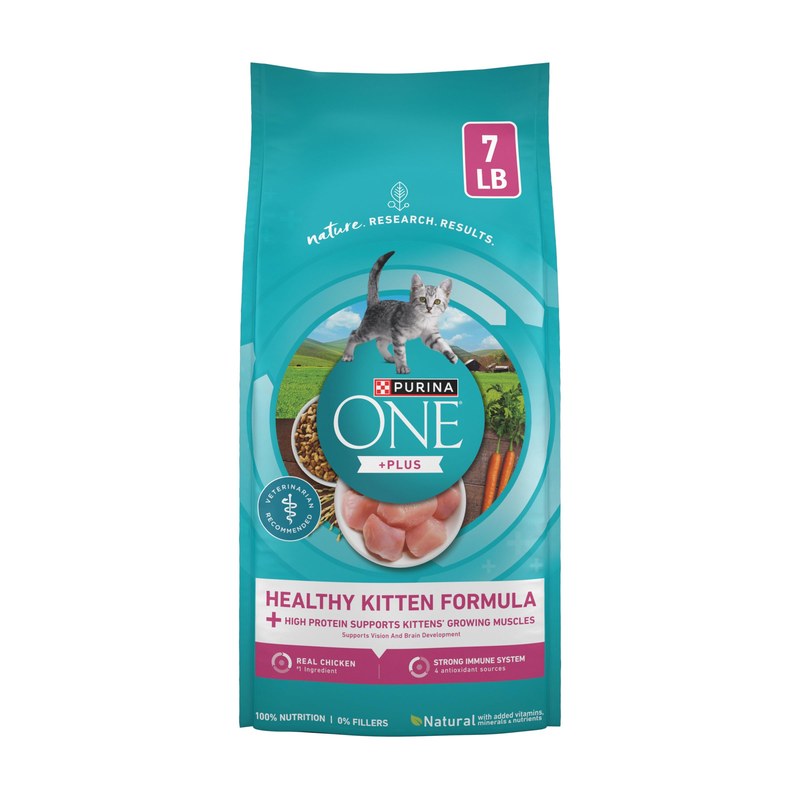
- Protein
- Real chicken
- Price
- $17.97 (7 lb bag)
★ 4.8/5 from 24,654 verified Amazon reviews. The standout kitten formula: real chicken first to support growing muscles, DHA for brain development, and antioxidants for immunity. Nearly 25,000 owners rate it 4.8/5 – one of the highest-rated kitten foods on the market, at a very fair price per pound.
- Pros
- Real chicken first ingredient
- DHA for brain & vision
- Excellent ratings, fair price
- Cons
- Dry food only – pair with wet
- 7 lb bag may be small for multi-cat homes
Purina Fancy Feast Wet Kitten Food Variety Pack
Best Wet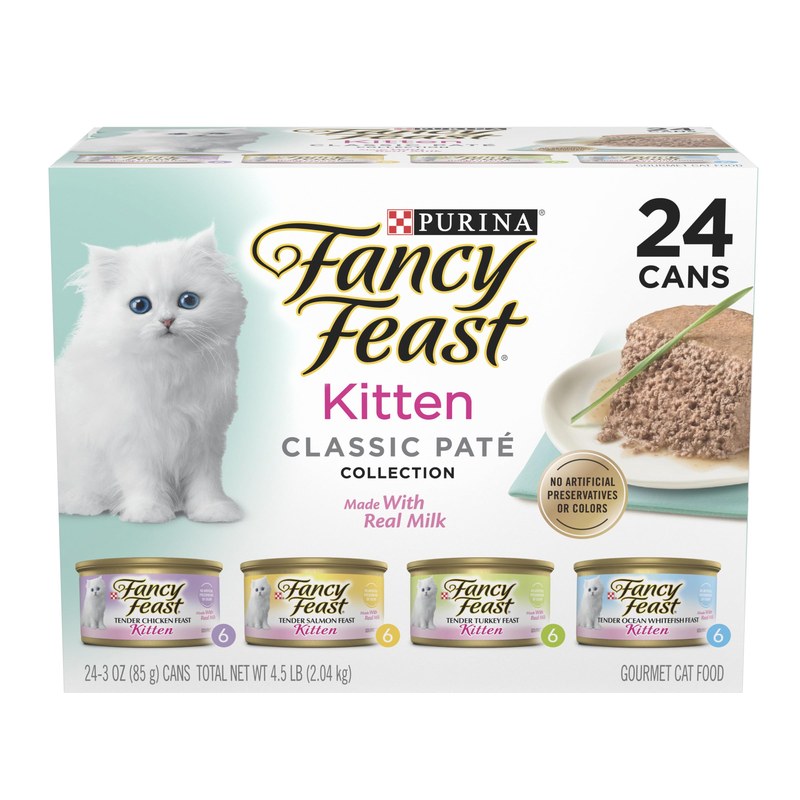
- Protein
- Oceanfish, turkey, chicken & salmon
- Price
- $22.86 (24 × 3 oz cans)
★ 4.7/5 from 29,728 verified Amazon reviews. The most popular kitten wet food on Amazon: four recipes in a 24-can pack, no artificial colors or preservatives, 100% complete and balanced. Perfect for kittens transitioning from nursing – and the moisture supports urinary health from day one.
- Pros
- Variety pack – 4 recipes
- Adds crucial moisture
- Massive 29k+ ratings
- Cons
- Wet food only – needs dry pairing for dental abrasion
- 3 oz cans: frequent opening
Open Farm Kitten Essentials Bundle
Best Organic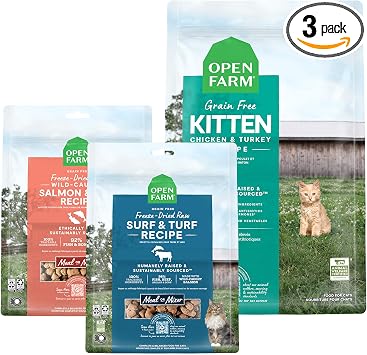
- Protein
- Humanely raised chicken
- Price
- $33.74 (bundle)
★ 4.3/5 from 203 verified Amazon reviews. Open Farm is one of the few brands with certified organic, ethically sourced ingredients and full supply-chain transparency. This kitten bundle pairs grain-free dry with wet recipes – a complete, clean start for a kitten raised on premium nutrition.
- Pros
- Certified organic ingredients
- Ethically sourced, transparent
- Complete dry + wet bundle
- Cons
- Premium price
- Fewer reviews (smaller brand)
Comparison Table
| Product | Price | Type | Protein | Best for |
|---|---|---|---|---|
| Purina ONE Kitten Dry | $17.97 | Dry | Chicken | Overall / value |
| Fancy Feast Kitten Wet | $22.86 | Wet | Fish & poultry | Moisture / picky eaters |
| Open Farm Kitten Bundle | $33.74 | Dry + Wet | Chicken | Organic / premium |
Kitten Feeding Guide
How much and how often
Kittens need 3–4 small meals a day until 6 months, then 2–3. A typical 8-week-old kitten eats about 1/3 cup of dry food daily, increasing to ~1/2 cup by 6 months. Follow the bag's feeding chart and adjust for growth – a steady weight gain is the best sign you're on track.
Wet + dry is the winning combo
Dry food for convenience and dental abrasion, wet food for moisture and easier transitions. Many owners free-feed dry during the day and add wet meals morning and evening.
Switch at 12 months
Move to adult food around the first birthday (18 months for Maine Coons and other large breeds). Transition over 7–10 days by mixing increasing amounts of adult food into the kitten food.
FAQ
When should I switch my kitten to adult cat food?
Around 12 months (18 months for larger breeds like Maine Coons). Kitten food is higher in calories, protein and DHA – switching too early can stunt development.
How much should I feed a kitten?
3–4 small meals a day until 6 months, then 2–3. Roughly 1/3 to 1/2 cup of dry food daily, adjusted for growth and activity. Free-feeding dry food works well for kittens – they self-regulate.
Do kittens need wet food?
Not strictly, but it's highly recommended. Wet food adds moisture for urinary health, and kittens transition from nursing to wet textures more easily than to hard kibble.
What is DHA and why does my kitten need it?
DHA is an omega-3 fatty acid that supports brain and vision development. Look for kitten-specific formulas with DHA or fish oil – it's one of the key differences from adult food.
Bottom Line
Start with Purina ONE Kitten Dry – the best-rated, best-value foundation for healthy growth. Add Fancy Feast Kitten Wet for hydration and variety, and choose Open Farm if organic sourcing matters to you. Feed kitten food until 12 months, then transition slowly.