A self-cleaning litter box is only as good as the litter you pour into it. Put the wrong one in and you get the same handful of complaints over and over in owner reviews: the rake smears waste instead of sifting it, the cycle stops halfway with a "cat detected" error, or the whole globe jams solid within a week.
None of that is usually a fault with the box. It's a litter mismatch. Automatic boxes depend on two things a normal litter box doesn't: a rake or sifter that must pass through the litter, and a pinch sensor (a weight sensor) that measures how much litter and cat is sitting in the globe. The right litter keeps both working; the wrong one breaks both.
We compared the most popular litters for automatic boxes in 2026 – clumping speed, clump hardness, dust level, granule size, tracking, and how they behave in a Litter-Robot 4 or a Neakasa M1. These are the six that keep an automatic box cycling instead of jamming.
As an Amazon Associate we earn from qualifying purchases.
| Product | Key Benefit | Price | Link |
|---|---|---|---|
| ARM & Hammer Clump & Seal Platinum | Best Overall | $22.99 | Check Price |
| Fresh Step Odor Shield Multi Cat | Best Odor Control | $16.99 | Check Price |
| Sustainably Yours Small-Grain | Best Low-Dust | $24.69 | Check Price |
| World's Best Low Tracking/Dust | Best Natural | $27.99 | Check Price |
| PETKIT Tofu Litter Optimizer Set | Best Tofu for Auto Boxes | $26.99 | Check Price |
| HoneyCare Tofu Cat Litter | Best Value Tofu | $17.82 | Check Price |
Why Litter Choice Makes or Breaks an Automatic Box
Manual boxes ask only that litter absorb. Automatic boxes ask three more things, and a litter that fails any one of them causes the faults owners complain about most.
1. It has to clump hard and fast. The rake grabs a clump and lifts it into the waste drawer. Soft, crumbly clumps fall apart on the way, leaving wet litter behind and smearing the rake. That's why "rock-hard clumps" isn't marketing fluff in this niche – it's the single property that decides whether a box runs clean.
2. It has to be low-dust and fine-grain. Dust settles into the pinch-sensor gap and the gear track. Once enough accumulates, the box starts throwing false readings and stalling mid-cycle. A fine, heavy granule stays put and passes cleanly through the sifter; a fluffy, dusty one migrates everywhere.
3. It has to sit at the right weight. The pinch sensor measures weight to decide whether a cat is present. Extra-light litters can under-register, and non-clumping litters change weight unpredictably as they absorb, which makes cycles unreliable.
Why Crystal, Lightweight and Non-Clumping Litters Fail
These three categories are the most common cause of a broken automatic box, and every one of them is sold with "works with automatic boxes" somewhere on the label.
- Crystal litter: absorbs liquid but never clumps. There is nothing solid for the rake to remove, so urine stays in the litter bed, the rake drags through a wet mess, and the bed fouls fast. Most box makers explicitly advise against it.
- Lightweight litter: often too light for the weight sensor to read consistently, and light granules escape the sifter and scatter into the mechanism. Owners report more false "cat detected" stops with lightweight formulas.
- Non-clumping and pellet litters: paper and wood pellets absorb rather than bond. They either jam the sifter or fall straight through it, defeating the point of an automatic box entirely.
If you're still choosing a box, our best self-cleaning litter boxes guide covers the hardware, and Litter-Robot 4 vs Neakasa M1 compares the two most popular globes head to head.
How We Selected & Compared
- Clump performance: how fast and how hard each litter bonds – the top factor for rake-based boxes
- Dust level: how much airborne dust each formula produces, since dust is what fouls the pinch sensor
- Granule size & weight: whether the granules sift cleanly and register reliably on a weight sensor
- Owner satisfaction: aggregated ratings from verified Amazon reviews, with an eye on automatic-box feedback specifically
- Value: cost per pound vs. how long a bag actually lasts in a robot
The 6 Best Litters for Self-Cleaning Boxes
ARM & Hammer Clump & Seal Platinum Multi-Cat
Best Overall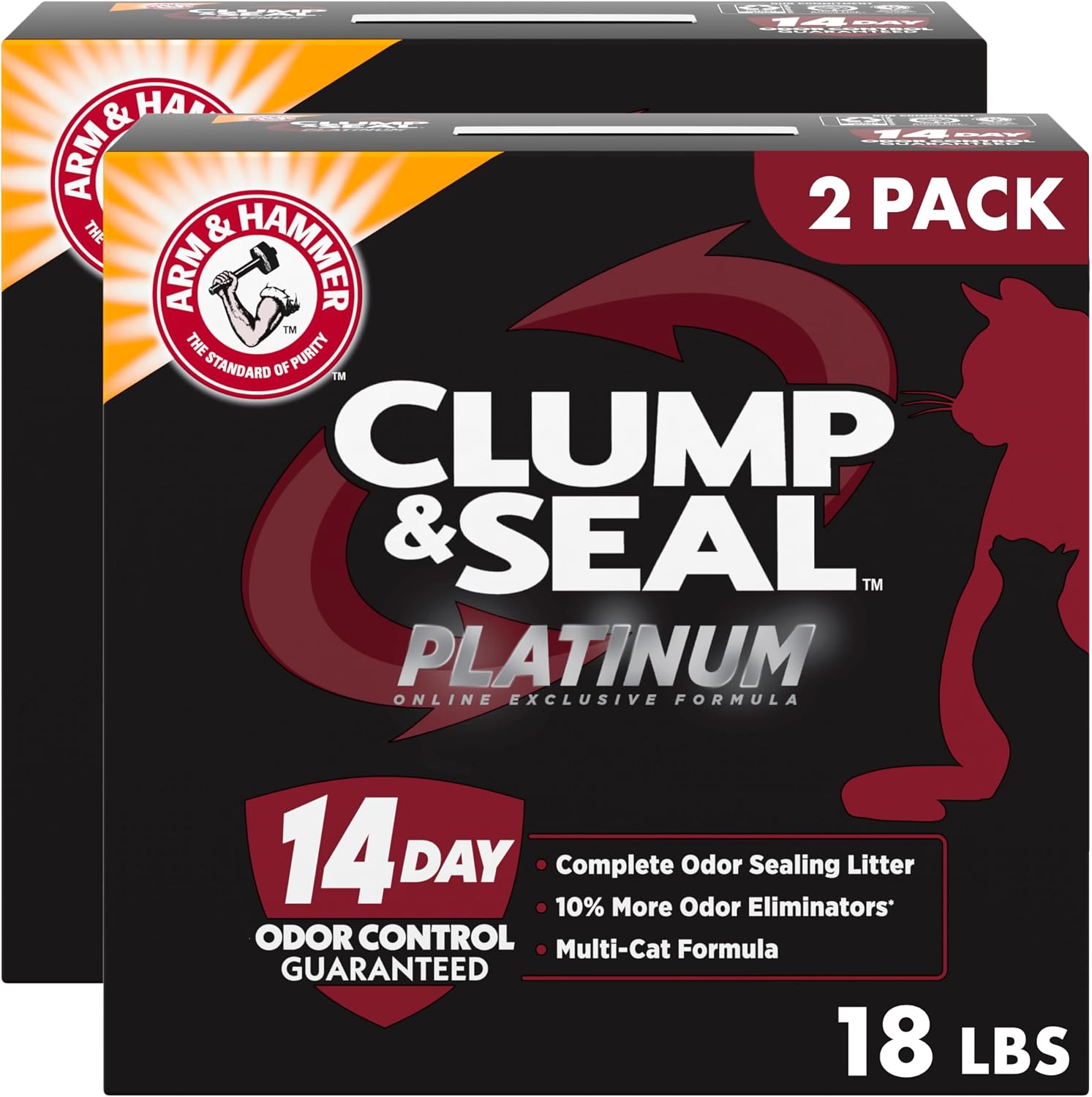
- Material
- Clumping clay
- Price range
- $22.99
★ 4.6/5 from 6,555 verified Amazon reviews. Clump & Seal Platinum is built around the exact property automatic boxes need: fast, rock-hard clumps that stay together when the rake lifts them. Its low-dust formula keeps the pinch sensor and gear track cleaner for longer, and the multi-cat strength is a good match for households running one robot for two or three cats. If you want the lowest-risk default for a Litter-Robot 4 or similar sifting box, start here.
- Pros
- Hardest, fastest clumps in mainstream clay
- Low dust keeps sensors clear
- Strong multi-cat odor control
- Cons
- Heavier bag to carry
- Scented – some cats prefer unscented
Fresh Step Odor Shield Multi Cat
Best Odor Control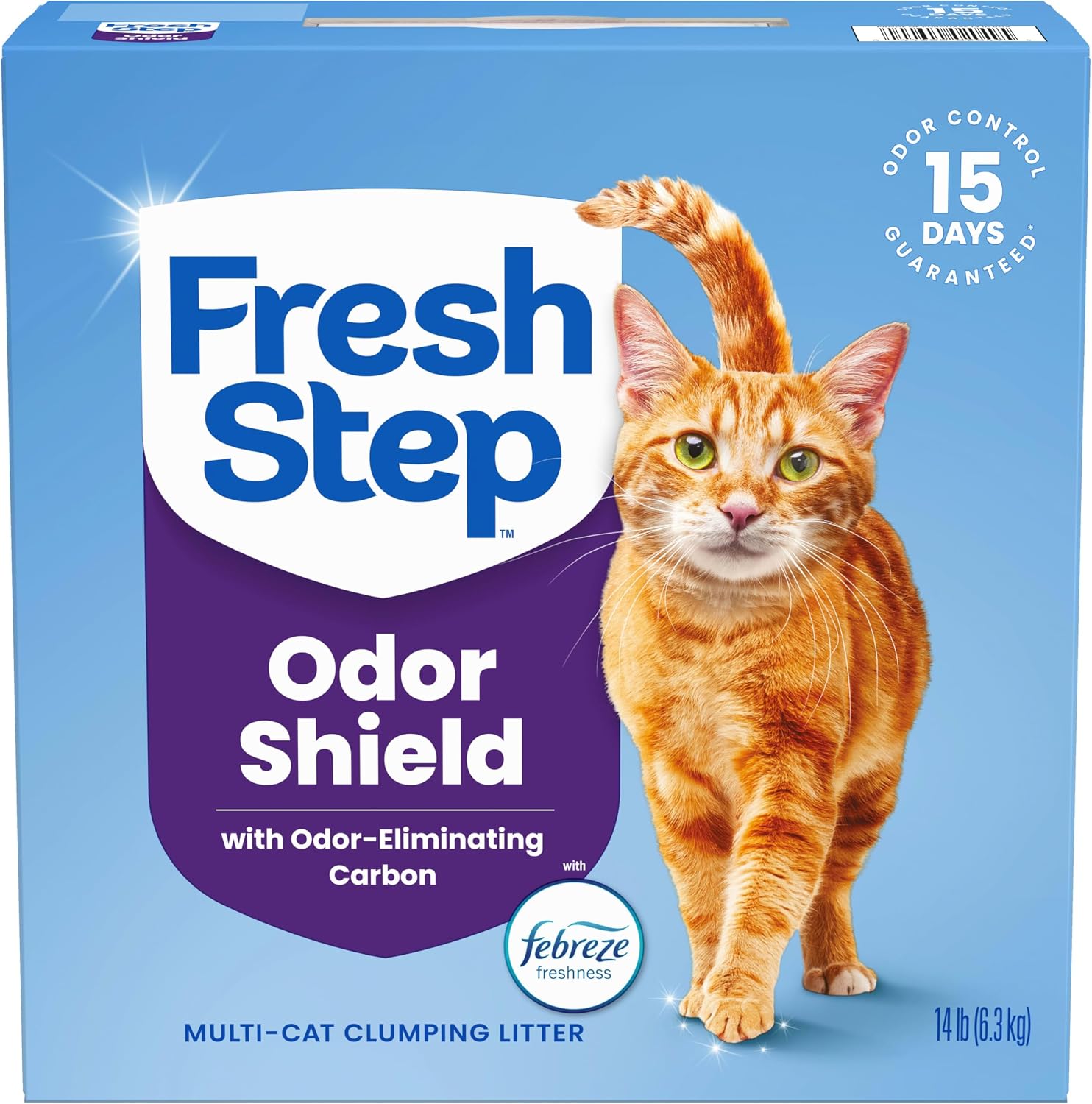
- Material
- Clumping clay
- Price range
- $16.99
★ 4.7/5 from 45,076 verified Amazon reviews. The highest rating in this list, backed by the largest owner base. Fresh Step's Odor Shield locks in ammonia with activated-carbon odor control, which matters more in an automatic box because waste can sit in the drawer for days between empties. It clumps firmly enough for a rake and is one of the most affordable formulas here. See our full best litter for odor control roundup for more on this category.
- Pros
- 4.7/5 from 45,000+ reviews
- Activated-carbon odor control
- Affordable multi-cat formula
- Cons
- Perfume scent is noticeable
- Medium dust compared to premium clays
Sustainably Yours Small-Grain Litter
Best Low-Dust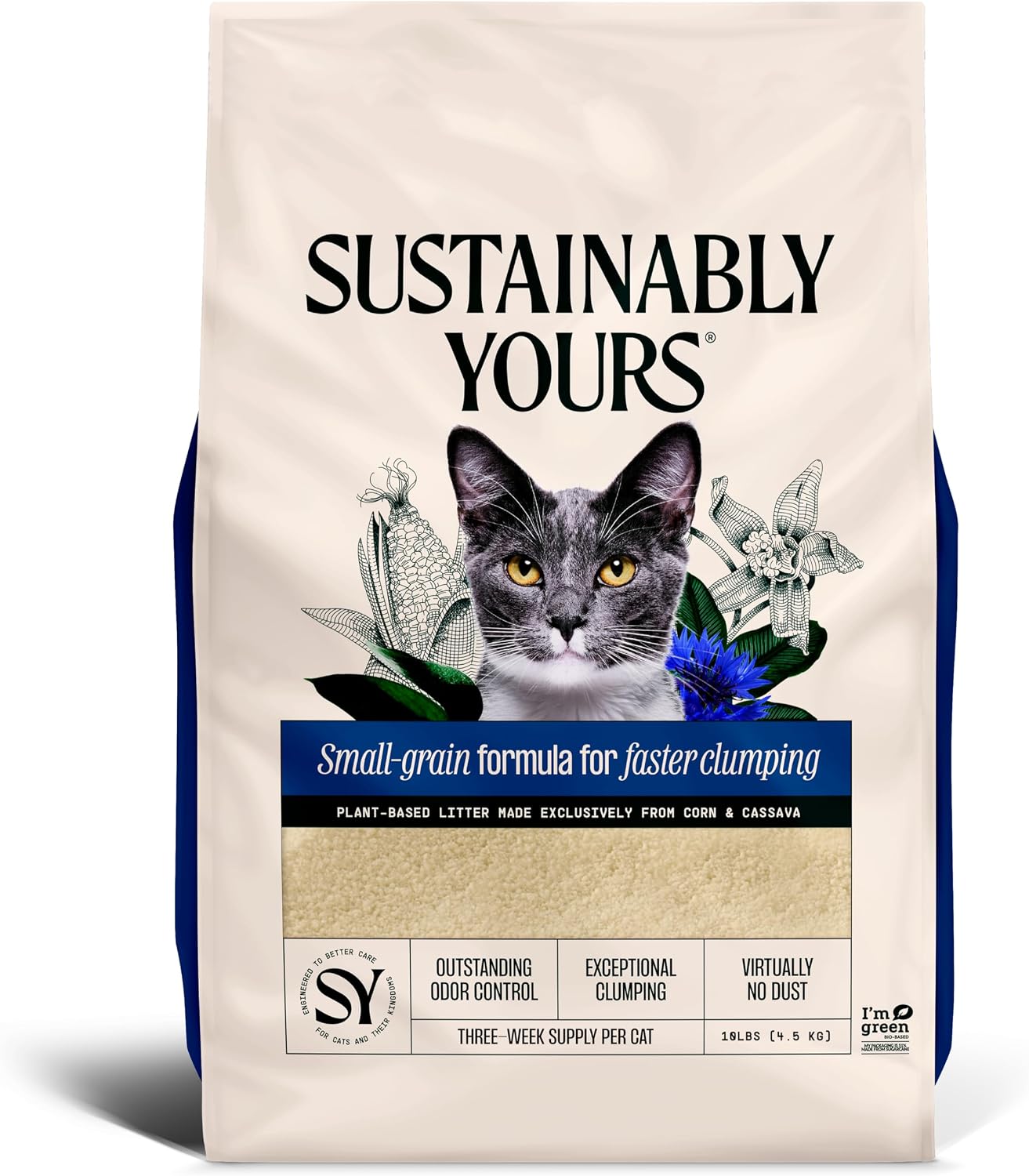
- Material
- Corn & cassava
- Price range
- $24.69
★ 4.1/5 from 5,121 verified Amazon reviews. Made from corn and cassava, this small-grain litter is the lowest-dust option in the list – which is exactly what a pinch sensor wants. It clumps fast and hard thanks to natural starches, and the fine granule sifts cleanly through a rake. Plant-based and biodegradable, it's the pick for anyone who wants robot reliability without clay dust settling into the mechanism. For more plant-based options, see our best natural cat litter guide.
- Pros
- Virtually dust-free
- Fast, hard clumping
- Biodegradable, plant-based
- Cons
- Pricier per pound
- Tracks a little without a mat
World's Best Cat Litter Low Tracking/Dust
Best Natural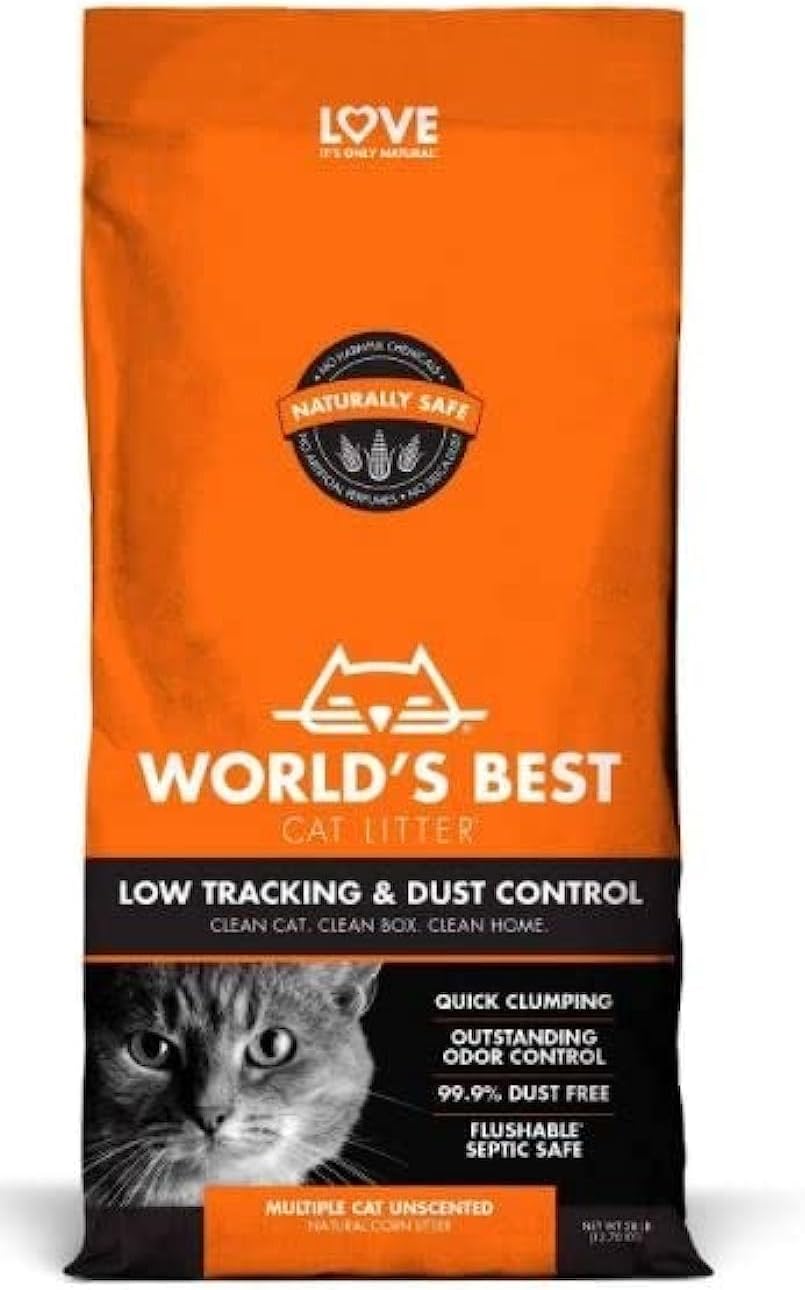
- Material
- Whole-kernel corn
- Price range
- $27.99
★ 3.9/5 from 5,977 verified Amazon reviews. The original corn litter, and a long-time favorite of automatic-box owners who want to avoid clay. This low-tracking, low-dust formula naturally clumps and absorbs odor without synthetic fragrance, and its granules are heavy enough to sift cleanly. It's the most established natural formula on the market, though it costs more per pound than clay.
- Pros
- Proven natural corn formula
- Low tracking and dust
- Naturally absorbs odor
- Cons
- Premium price
- Texture takes some cats a few days
PETKIT Tofu Litter Optimizer Set
Best Tofu for Auto Boxes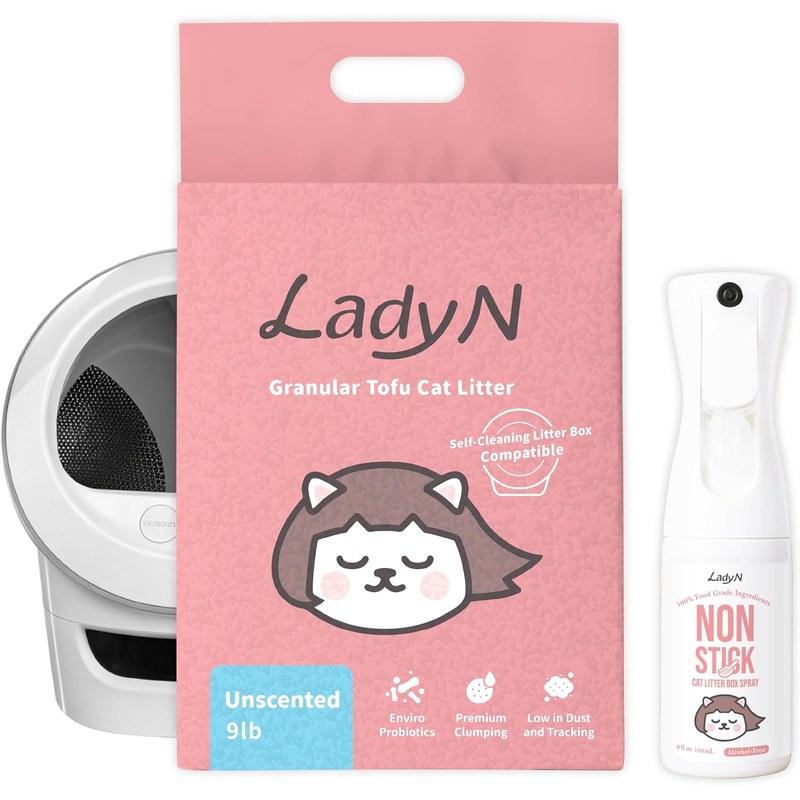
- Material
- Tofu (plant-based)
- Price range
- $26.99
★ 4.1/5 from 1,039 verified Amazon reviews. This set is purpose-built for robot boxes: granular tofu litter paired with an alcohol-free, food-grade non-stick spray. The unscented, low-dust tofu clumps tightly so rakes don't smear waste, and the spray keeps the chamber and liner from sticking. If you specifically want a plant-based litter for a Litter-Robot 4 or Neakasa M1, this is the most directly compatible pick in the list.
- Pros
- Designed for self-cleaning boxes
- Non-stick spray included
- Unscented and low-dust
- Cons
- Premium price
- Tofu texture not every cat's favorite
HoneyCare Tofu Cat Litter
Best Value Tofu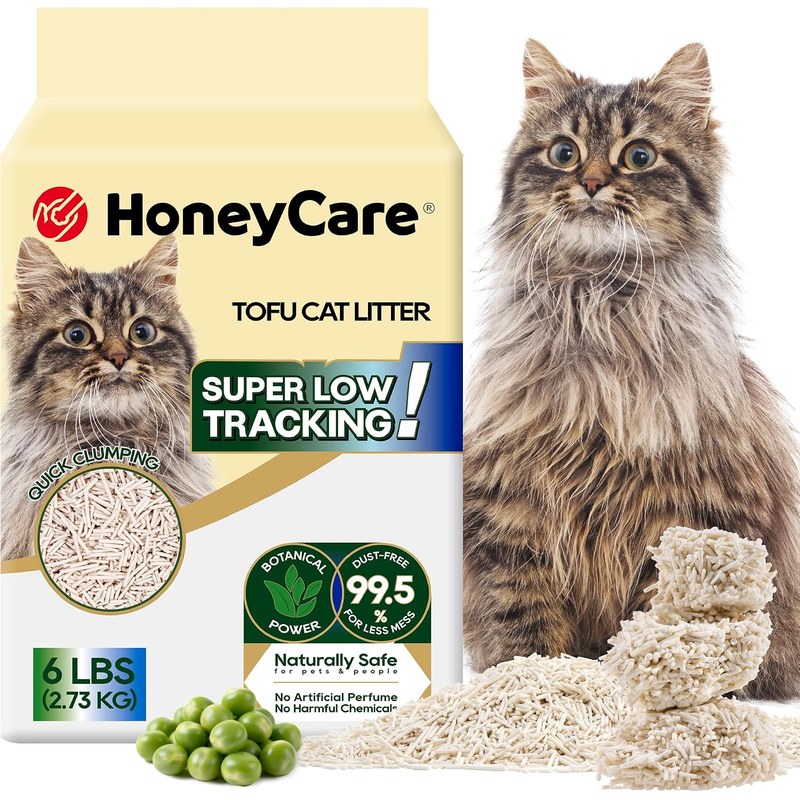
- Material
- Plant-based tofu
- Price range
- $17.82
★ 4.5/5 from 327 verified Amazon reviews. HoneyCare is the affordable way into tofu litter for a self-cleaning box: 100% plant-based pellets, low dust, and quick clumping that holds together for easy sifting. Owners consistently note how little dust it produces versus clay, which is the property that protects a pinch sensor longest. The highest-rated tofu in this list, and the cheapest per bag.
- Pros
- 4.5/5 and the cheapest tofu here
- Low-dust plant-based pellets
- Quick, firm clumping
- Cons
- Smaller review base
- Some cats need a transition week
Comparison Table
| Product | Price | Type | Dust | Clumping | Best for |
|---|---|---|---|---|---|
| ARM & Hammer Clump & Seal Platinum | $22.99 | Clay | Low | Very hard | Overall |
| Fresh Step Odor Shield | $16.99 | Clay | Medium | Hard | Odor control |
| Sustainably Yours Small-Grain | $24.69 | Corn + cassava | Very low | Hard | Low dust |
| World's Best Low Tracking | $27.99 | Corn | Low | Hard | Natural |
| PETKIT Tofu Optimizer Set | $26.99 | Tofu | Very low | Hard | Robot-ready tofu |
| HoneyCare Tofu | $17.82 | Tofu | Low | Hard | Value tofu |
How to Choose Litter for a Self-Cleaning Box
Match the litter to the mechanism
Sifting/rake boxes (Litter-Robot 4, Neakasa M1) need hard-clumping, fine-grain, low-dust litter – clumping clay or premium tofu. Tray-and-rake units are more forgiving of tracking but still punish soft clumps. Always check the box maker's current recommended list before buying a new litter, especially while your unit is under warranty.
Keep it at the fill line
Overfilling is the number-one self-inflicted fault. Extra litter spills into the pinch-sensor gap, triggers false "cat detected" errors, and stalls cycles. Underfilling makes clumps stick to the liner instead of dropping clean. Follow the marked line and top up after each waste-drawer empty.
Clean the sensor, don't just change the litter
Even a low-dust litter leaves some residue. Wipe the pinch-sensor gap and the gear track monthly with a dry cloth. Five minutes a month prevents almost every mid-cycle jam – and it's the step owners skip most often.
Transition slowly
Cats are texture-sensitive, and a sudden switch can cause box avoidance – which is worse than any litter fault. Mix the new litter into the old over 5–7 days, watching for loose stools or accidents outside the box as a signal to slow down.
FAQ
What kind of litter works best in a self-cleaning litter box?
A hard-clumping, low-dust, fine-grain litter works best. Automatic boxes rely on a rake or sifter and a pinch (weight) sensor, so the litter must clump tightly and fast, stay out of the sensor gap, and not collapse into soft mush. Standard clumping clay (like ARM & Hammer Clump & Seal Platinum) and premium tofu litters are the safest everyday choices.
Why does crystal or lightweight litter break automatic litter boxes?
Crystal litter does not clump – it absorbs liquid – so there is nothing for the rake to sift out, and the moisture stays in the bed where it fouls the rake and liner. Lightweight litters can be too light for the weight/pinch sensor to register reliably, and non-clumping or pellet litters either jam the sifter or pass straight through it.
Will clumping clay litter jam the pinch sensor?
It can, if you overfill the globe or use an extra-dusty litter. Dust and stray granules that fall into the pinch-sensor gap are the single most common cause of false "cat detected" and mid-cycle stop errors. Keep the litter at the fill line, use a low-dust formula, and wipe the sensor gap monthly to avoid it.
Is tofu litter safe for a Litter-Robot 4 or Neakasa M1?
Generally yes – many owners run tofu litter in both because it clumps tightly and doesn't stick to the rake. Choose a fine-grain, unscented tofu formula made for robots (or a set with a non-stick spray), and always confirm the manufacturer's current compatibility guidance before switching a box that is under warranty.
How much litter should I put in an automatic litter box?
Follow the fill line, not a fixed depth. Automatic boxes are calibrated to a specific litter volume – usually around 2–3 inches for Litter-Robot style globes and to the marked line for tray-based units. Overfilling pushes litter into the sensor gap and causes errors; underfilling makes clumps stick to the liner.
Bottom Line
For most self-cleaning boxes, ARM & Hammer Clump & Seal Platinum Multi-Cat is the safest pick: the hardest clumps for the rake to lift, low dust to protect the pinch sensor, and strong multi-cat odor control. If dust worries you most, Sustainably Yours Small-Grain is nearly dust-free; if you want plant-based and robot-ready, the PETKIT Tofu Optimizer Set is purpose-built. Whatever you choose, keep it at the fill line and wipe the sensor monthly – that combo prevents the jams people blame on the box.