Every cheap cat tree looks fine in the product photos. The difference shows up months later, when the top platform starts to sway, the poles develop a creak, and the whole tower rocks when your cat lands on it. "It wobbles" and "it tipped over" are the two most common complaints in cat-tree reviews – and almost always a construction problem, not an owner problem.
We analyzed the most popular heavy-duty cat trees on the market, comparing what actually makes a tower stable: base area and shape, post material and thickness, overall weight and weight capacity, and whether the model supports wall anchoring. These are the six that hold still under real cats, and the design details to look for if you want a tree that's still solid in year three.
As an Amazon Associate we earn from qualifying purchases.
| Product | Key Benefit | Price Range | Link |
|---|---|---|---|
| Armarkat B5701 Real Wood 57-Inch | Best Overall | $100–140 | Check Price |
| Armarkat Large 74" | Best for Big Cats | $130–170 | Check Price |
| FEANDREA 134 cm | Best Large Platform | $60–90 | Check Price |
| Heybly 43.3 inch | Best Mid-Size | $35–55 | Check Price |
| Yaheetech 36in with Ramp | Best Budget | $45–65 | Check Price |
| Catit Vesper Treehouse, Large | Best Modern | $150–210 | Check Price |
What Actually Makes a Cat Tree Sturdy
Stability is engineering, not decoration. Four factors decide whether a tree stands firm when a cat launches off it:
Base area and shape. This is the foundation of everything. A tall tower on a small base is a lever waiting to tip. We look for at least 20 inches of base depth for an average cat, and 26–28 inches for a large or heavy one. Square bases resist tipping better than round ones, and a carpeted base grips hardwood and tile instead of sliding.
Post material and thickness. Solid wood and dense engineered wood (MDF) posts hold their shape under load. Thin particle board and hollow cardboard-core poles flex a little with every jump, and that flex is what eventually becomes a permanent wobble. Thicker posts also mean the platform bolts have more material to bite into.
Weight and weight capacity. A heavier tree is more stable because its own mass resists the leverage of a jumping cat. Check the manufacturer's stated weight capacity and, more usefully, skim reviews from owners of cats in your cat's weight class – a tree rated for 30 lbs that real owners call "rock solid" is worth more than a spec sheet.
Wall anchoring. The final piece. Even a well-built tree benefits from an anchor strap when a heavy, active cat uses the top perch. It's cheap, quick, and it removes the worst-case tipping risk entirely.
Why Cheap Trees Wobble and Sag by Year One
Budget trees aren't a scam – they're just built to a price, and the savings come out of the exact parts that keep a tree rigid. Three things go wrong on a predictable schedule:
- Thin particle board flexes. Every landing bends the board slightly. Over hundreds of jumps, the flex becomes permanent deformation, and the platform that was flat in month one visibly sags by month twelve.
- Bolts loosen and holes enlarge. Movement works bolts loose. Once the threads start moving inside a soft-board hole, you can re-tighten them, but the joint never gets truly rigid again – and each re-tightening enlarges the hole a little more.
- Poles compress. Cardboard-core and thin-wood posts compress at the joints under a cat's weight, so the whole structure develops a lean. That lean is why so many cheap trees end up leaning against a wall for support.
The fix isn't exotic: real wood or thick engineered wood, a wide base, and an anchor. That's why our picks skew toward Armarkat's real-wood construction and heavy bases. If height is your priority, our best cat trees for large cats guide goes deeper on big-breed needs, and the cat tree buying guide walks through the full checklist.
How We Selected & Compared
- Construction: post material (real wood vs. particle board), base dimensions and shape, overall weight
- Stability signals: how often owner reviews mention wobble, tipping or sagging under real cats
- Owner satisfaction: aggregated ratings from verified Amazon reviews across all six models
- Value: price vs. construction quality – no flimsy budget traps, no overpriced gimmicks
- Anchoring support: whether the model ships with a wall anchor or can take one easily
The 6 Best Sturdy Cat Trees
Armarkat B5701 Real Wood 57-Inch Cat Tree
Best Overall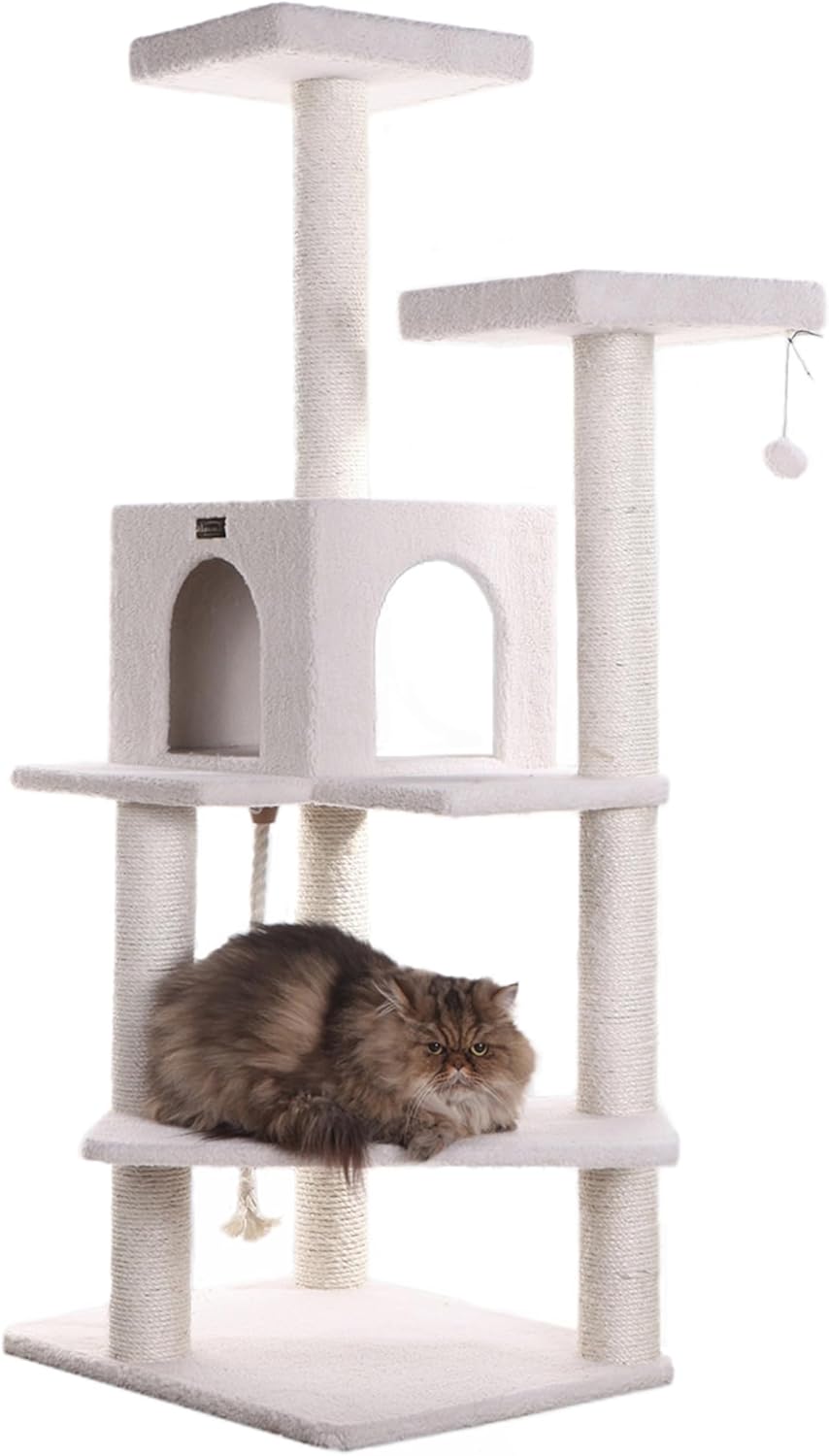
- Material
- Wood
- Price range
- $100–140
★ 4.6/5 from 19,535 verified Amazon reviews. The most-reviewed tall real-wood cat tree in our analysis, and the safest all-round bet for stability. Real wood construction gives the posts and platforms the rigidity particle board lacks, while the wide 28×25-inch base counters the leverage of a hard landing. Nearly 20,000 owner reviews mean this is also the model with the most long-term stability data behind it – owners of 15+ lb cats consistently describe it as firm rather than wobbly.
- Pros
- Real wood construction – rigid, not flexible
- Wide 28×25-inch base for stability
- 19,500+ reviews of proven long-term use
- Cons
- Mid-to-high price
- Heavy – plan for two-person assembly
Armarkat Large 74" Cat Tree
Best for Big Cats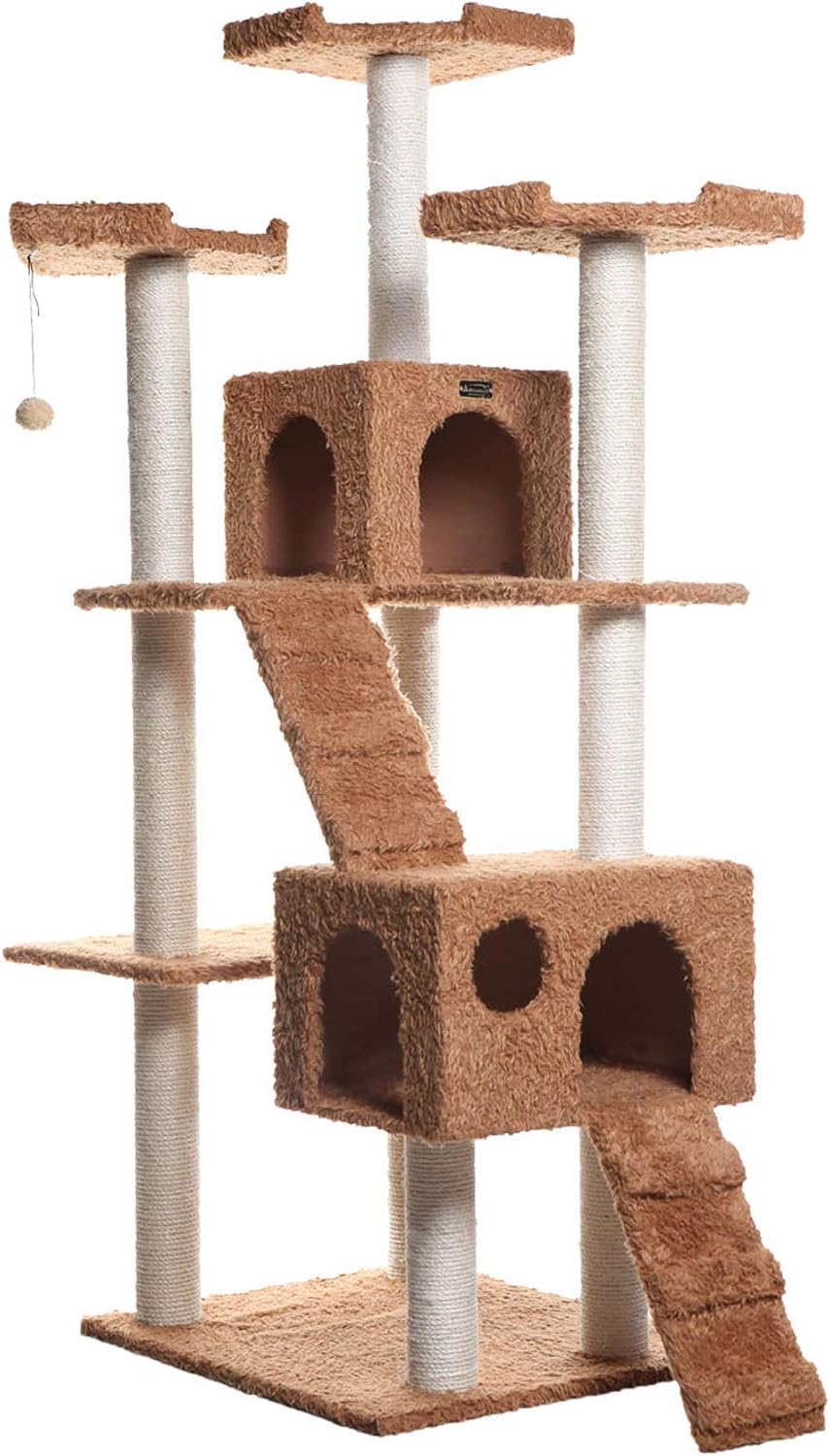
- Material
- Wood
- Price range
- $130–170
★ 4.7/5 from 1,521 verified Amazon reviews – the highest average rating in this list. At 74 inches it's the tallest tree here, which makes base stability even more critical, and Armarkat's real wood construction plus the built-in cat house keeps the center of gravity low and the structure rigid. For heavy cats or multi-cat homes, the extra perches let cats spread out, which reduces the concentrated load on any single platform. Check your ceiling height before ordering.
- Pros
- Tallest model – 74 inches for climbers
- Highest rating at 4.7/5
- Real wood construction keeps it firm
- Cons
- Verify ceiling clearance first
- Large footprint, heavy, longer assembly
FEANDREA 134 cm Cat Tree with Big Platform
Best Large Platform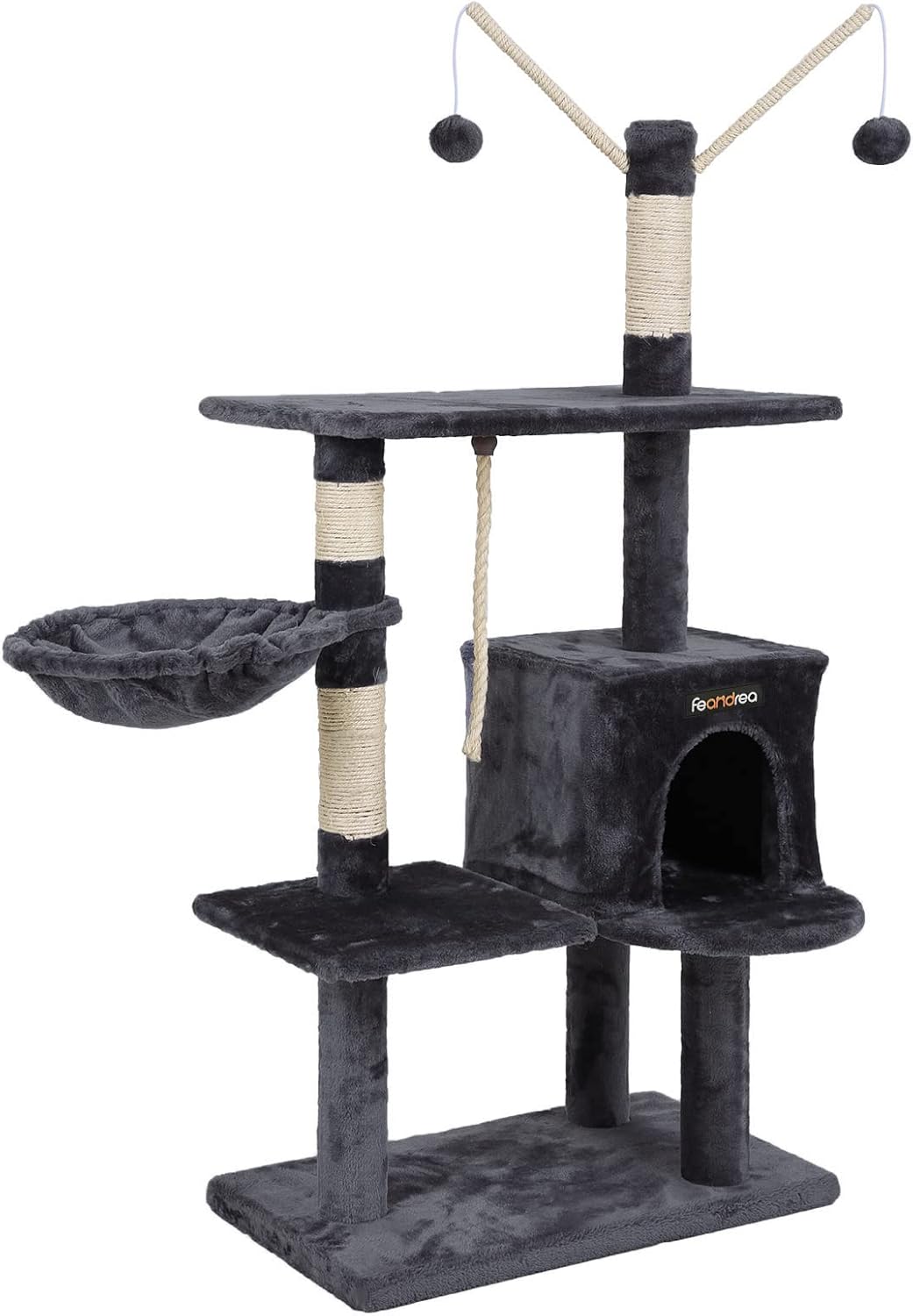
- Material
- Wood + plush
- Price range
- $60–90
★ 4.6/5 from 3,328 verified Amazon reviews. FEANDREA builds one of the most popular mid-market towers, and this 134 cm (~53-inch) model earns its place on stability: a large top platform that spreads a cat's weight instead of concentrating it, plus two cat houses that add mass low down. It won't out-build the real-wood Armarkats above it, but at roughly half the price it delivers most of the rigidity an average household needs, with a 4.6/5 rating from over 3,300 owners.
- Pros
- Big platform spreads weight for stability
- Houses add low-down mass
- Strong value under $100
- Cons
- Shorter than the Armarkat towers
- Plush surfaces need regular vacuuming
Heybly Cat Tree with Toy, 43.3 inch
Best Mid-Size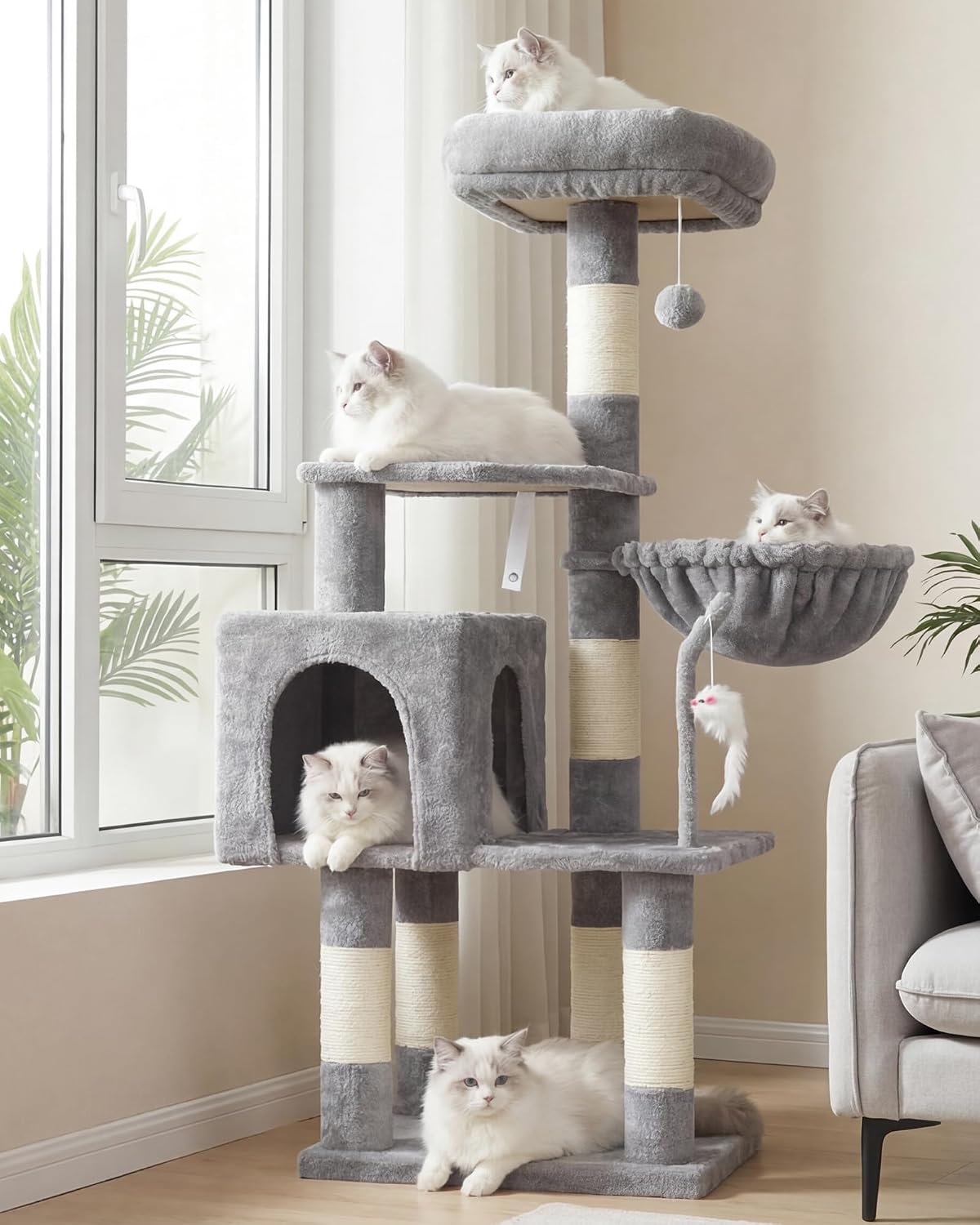
- Material
- Wood + plush
- Price range
- $35–55
★ 4.2/5 from 7,758 verified Amazon reviews. The Heybly is the compromise for rooms that can't take a 57- or 74-inch tower: a 43.3-inch tree with a modest footprint that still feels planted, because its lower height means less leverage on the base. A mid-height tree is intrinsically more stable than a tall one, which makes this a smart pick if your priority is "doesn't wobble" rather than "as tall as possible." Anchor it if your cat is on the heavy side.
- Pros
- Compact footprint for small rooms
- Lower height = inherently more stable
- Budget price with 7,700+ reviews
- Cons
- Not tall enough for enthusiastic climbers
- Anchor it for cats over ~15 lbs
Yaheetech 36in Cat Tree with Ramp
Best Budget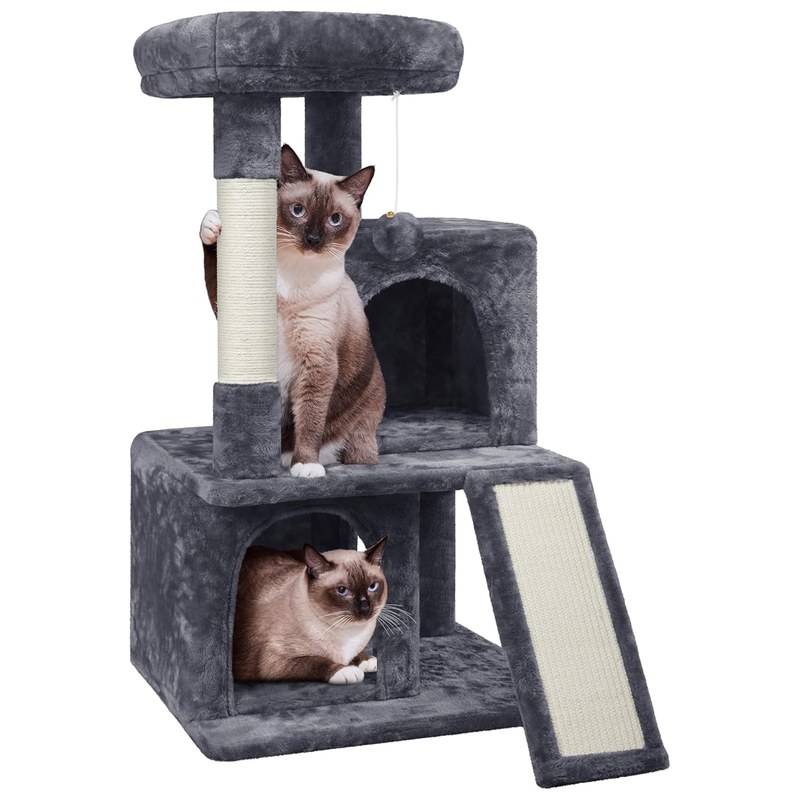
- Material
- Wood + plush
- Price range
- $45–65
★ 4.5/5 from 5,159 verified Amazon reviews. The best low-cost option in our list, and a genuinely stable one thanks to its short 36-inch height and a ramp that lets cats walk up rather than launch. Lower towers tip less, so a budget tree at this height is a much safer bet than a budget tree at 60 inches. The ramp also distributes weight toward the base. A solid 4.5/5 from over 5,000 owners makes it the value pick for stability on a small budget.
- Pros
- Low 36-inch height resists tipping
- Ramp adds low-down stability
- 4.5/5 from 5,000+ owners at a budget price
- Cons
- Limited climbing height
- Plush needs vacuuming
Catit Vesper Treehouse, Large
Best Modern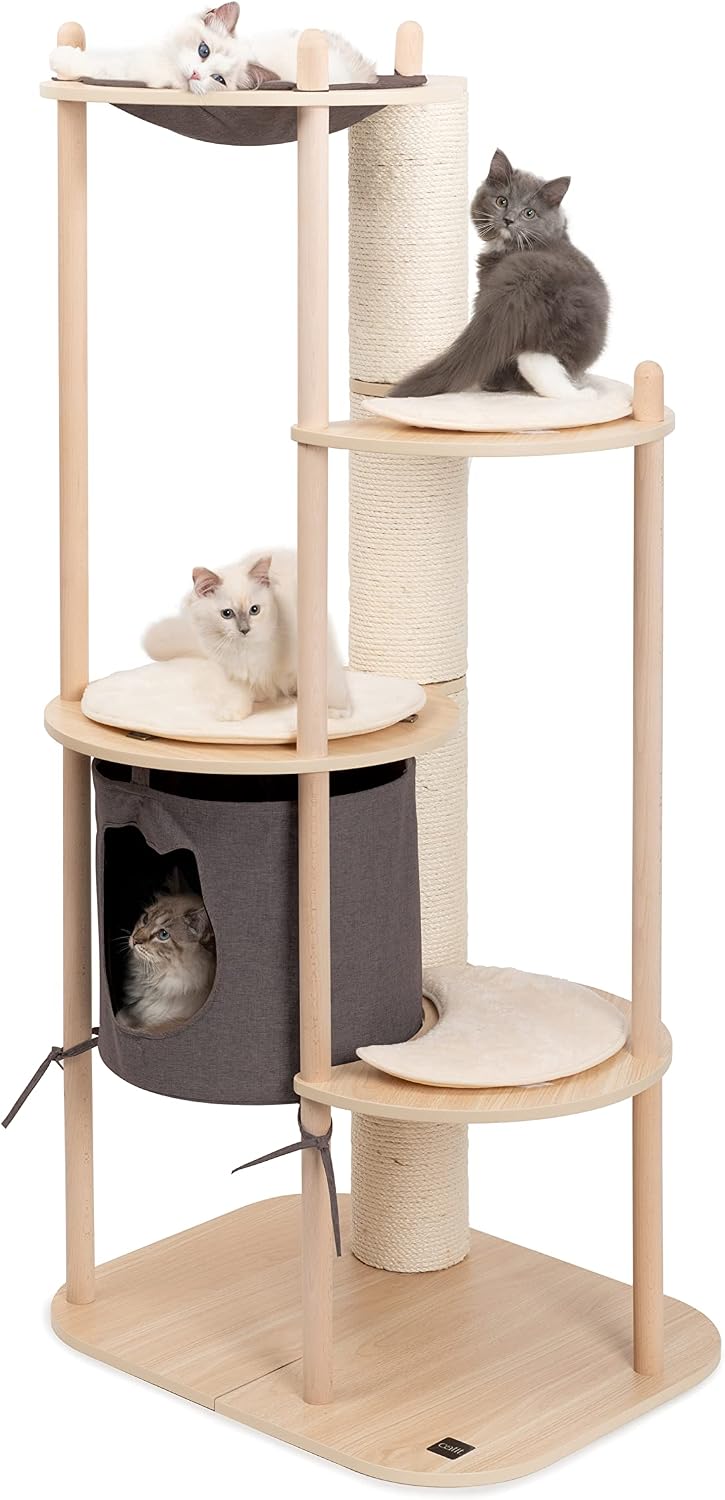
- Material
- Wood + plush
- Price range
- $150–210
★ 4.5/5 from 5,341 verified Amazon reviews. The Vesper is for people who want a sturdy tree that looks like furniture. Its wood-and-plush construction is furniture-grade, with a heavier, more solid base than most soft-sided towers, and reviewers consistently describe it as stable and well-finished. It's the most expensive model here and you pay for the design, but for a living room where a beige carpet tower is a non-starter, it's the clear pick. See also our roundup of best cat scratchers if scratching is your main concern.
- Pros
- Furniture-grade look with a solid base
- Sturdy wood construction
- Large size suits bigger cats
- Cons
- Most expensive option here
- Fabric surfaces need more care than sisal
Comparison Table
| Model | Price | Height | Material | Base | Best for |
|---|---|---|---|---|---|
| Armarkat B5701 | $100–140 | 57 in | Real wood | 28×25 in | Overall |
| Armarkat 74" | $130–170 | 74 in | Real wood | Wide | Big cats |
| FEANDREA 134 cm | $60–90 | ~53 in | Wood + plush | Wide platform | Large platform |
| Heybly 43.3" | $35–55 | 43.3 in | Wood + plush | Compact | Mid-size |
| Yaheetech 36" | $45–65 | 36 in | Wood + plush | Low + ramp | Budget |
| Catit Vesper Large | $150–210 | Large | Wood + plush | Heavy base | Modern |
How to Choose a Sturdy Cat Tree
Start with the base, not the height
Buyers obsess over height, but base area is what keeps a tree standing. A 60-inch tower on a 20-inch base is a see-saw; a 45-inch tower on a 28-inch base is a rock. Measure your floor space, then favor the widest, deepest, heaviest base your room allows.
Check the pole material, not the color
"Real wood" and "engineered wood" are meaningful; "wood" alone sometimes means a thin particle-board skin. Look for concrete signals in the listing – solid wood posts, stated post diameter, and owner photos in reviews showing thick supports. Hollow, cardboard-core poles are the giveaway of a tree that will sag.
Anchor it, always
Use the included wall anchor even if the tree feels solid. It costs nothing extra and takes minutes. A tree that can't tip is a tree your cat will use with confidence – and it protects furniture, other pets and the cat itself from a worst-case fall.
Verify weight capacity against your cat
Manufacturer weight ratings vary in how they're measured. The most reliable signal is owner reviews from cats in your cat's weight class. If reviewers with 15–20 lb cats call a tree solid, believe it; if they mention wobble, skip it no matter what the spec sheet claims.
FAQ
What makes a cat tree sturdy?
Four things: a wide, heavy base (at least 20 inches deep, more for big cats), thick solid-wood or dense engineered-wood posts instead of thin particle board, a low center of gravity, and a wall anchor. Get those right and even a 20-pound cat can launch off the top perch without the tower moving.
Why do cheap cat trees wobble and sag after a year?
Cheap trees use thin particle board and hollow posts that flex under load. Every jump loosens the bolts a little more, the joints compress, and the platform bolts enlarge their own holes – so a tree that felt solid in month one develops a visible sway by month twelve. Real wood and thick engineered wood resist this far better.
Do I really need to anchor a cat tree to the wall?
For any active cat over about 12 pounds, yes. The anchor strap is usually included, costs nothing extra and takes minutes to install, and it removes the worst-case tipping risk entirely. Corners help too, but a wall anchor is the single cheapest safety upgrade you can make.
What base size should a sturdy cat tree have?
Aim for a base at least as wide as the tree is tall relative to its top perch – in practice, 20+ inches of depth for an average cat and 26–28 inches for a large or heavy cat. Square bases resist tipping better than round ones, and a carpeted base grips hardwood and tile.
How long should a heavy-duty cat tree last?
A well-built tree with real wood posts can last 3–5 years or more. The first thing to wear is the sisal on the scratching posts, usually within 6–18 months under a big cat. Choose a tree with replaceable or re-wrappable sisal posts and you can extend its life for years at very low cost.
Bottom Line
For most homes, the Armarkat B5701 Real Wood 57-Inch is the safest pick: real wood construction, a wide 28×25-inch base, and nearly 20,000 reviews proving it stays put. Heavy-cat households should go to the Armarkat 74", the FEANDREA 134 cm is the value winner, and the Yaheetech 36" is the steadiest option on a budget.
The rule for any sturdy tree: base area, post material and anchoring beat height every time. A firm 45-inch tower your cat trusts is worth more than a shaky 70-inch one it avoids.