A hairball is not hair. It is a felted plug of hair, food and mucus compacted in the stomach, and the hacking before it comes up is the cat trying to move something that is not meant to go that way. Cats swallow a lot of fur grooming; most passes through the gut, and the small proportion that does not is what owners see on the carpet.
There are two legitimate ways to reduce frequency: fewer hairs going in – brushing, not supplements – and easier passage of the hairs already swallowed, which is where lubricants and fiber come in. Everything here does one of those two jobs. None of them removes a hairball already blocking the intestine; that is a surgical problem, not a shelf problem.
| Product | Best For | Format | Price | Rating | Link |
|---|---|---|---|---|---|
| Tomlyn Laxatone Tuna Gel | Best Overall | 4.25 oz gel | $15.47 | 4.2/5 (4,147) | View on Amazon |
| Hartz Hairball Remedy Plus | Best Budget | 2.5 oz paste | $8.01 | 4.2/5 (6,255) | View on Amazon |
| VetriScience Hairball Control | Best Chew | 60 soft chews | $10.00 | 3.7/5 (1,087) | View on Amazon |
| Hairball Buster Powder | Best Powder | 30 servings | $23.99 | 4.1/5 (204) | View on Amazon |
| Native Pet Hairball Treatment | Best Soft Chew | 300 pillows | $19.99 | 4.7/5 (37) | View on Amazon |
| Hill's Urinary & Hairball Control | Best Food | 3.5 lb dry | $24.97 | 4.6/5 (15,874) | View on Amazon |
Hairballs: What Is Actually Happening
Barbs on the tongue make grooming a one-way conveyor: hair goes in and does not come off. Most travels through the gut and leaves in the stool. The rest accumulates in the stomach, mixes with food and mucus, and irritates the lining enough that the cat vomits it up – usually tubular, often with food around it.
Two things before you buy anything. Hairballs are far more common in long-haired breeds and in heavy spring and autumn shedders, and rare in short-haired cats that are groomed regularly. And frequent hairballs are a symptom, not a diagnosis: over-grooming from stress, fleas, allergies or skin disease puts far more hair into the system than normal grooming, and no supplement fixes that.
The dangerous version is a trichobezoar – a hairball that neither comes up nor passes, and obstructs the intestine. Signs: repeated unproductive retching, vomiting after eating, appetite loss, lethargy, constipation. That is an emergency, and it is why these products are for prevention, not treatment.
Lubricant or Fiber?
- Lubricants – petrolatum, mineral oil or malt-based gels. They coat swallowed hair so it slides through the gut, and they work within a day or two. Best for a cat with normal stools who brings up a hairball every few weeks.
- Fiber – psyllium husk, flax, inulin, cellulose. It bulks the stool and helps move hair along the colon, and it takes days to weeks to show an effect. Best for a cat with hard, dry stools or intermittent constipation.
- Food – a complete diet with higher insoluble fiber. Slowest of all, but it requires no extra step and no fight with the cat.
- Grooming – a deshedding brush is the only intervention that reduces the amount of hair going in. Everything else manages the hair that is already there.
The 6 Best Hairball Remedies for Cats
Tomlyn Laxatone Hairball Gel, Tuna, 4.25 oz
Best Overall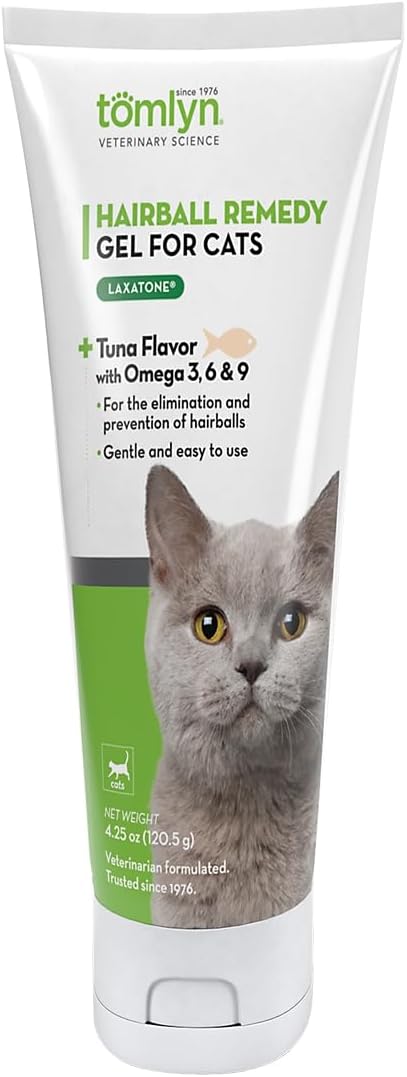
- Price range
- $15.47
4.2/5 from 4,147 Amazon ratings. The vet-clinic default, and the one most owners recognise: a pale petrolatum-based gel with tuna flavour, sold in a 4.25 oz tube with a dosing chart by body weight. The mechanism is simple lubrication – the gel coats swallowed hair so it passes rather than coming back up – and the formula adds omega-3, -6 and -9 fatty acids, which do a little for coat condition at the same time. The standard method is a ribbon on the paw or nose, where the cat licks it off without a fight.
It is not a fiber product, so it will not help a constipated cat, and it is not a fix for over-grooming. Most cats accept the tuna flavour, a stubborn minority refuse it, and the gel stains fabric. Store it at room temperature – cold gel is harder to dose.
- Pros
- Vet-formulated petrolatum gel
- Dose on paw – no syringing
- 4,147 ratings, long track record
- Adds omega fatty acids
- Cons
- No fiber – useless for constipation
- Some cats refuse the taste
- Greasy and stains fabric
Hartz Hairball Remedy Plus Salmon Paste, 2.5 oz
Best Budget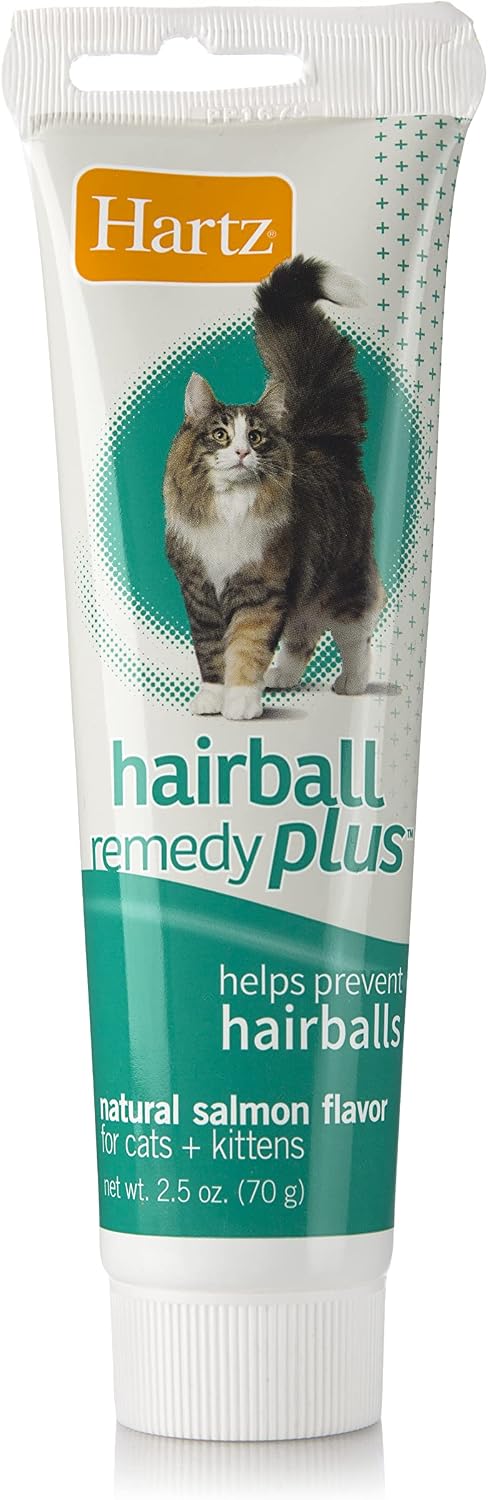
- Price range
- $8.01
4.2/5 from 6,255 Amazon ratings. The cheapest way to test whether a paste works for your cat, and the second-most-reviewed product here. A 2.5 oz tube of malt and petrolatum paste in salmon flavour, dosed on the paw. At $8.01 it is half the price of the Laxatone for about 60% of the volume.
The catch is the tube size: 2.5 oz is roughly a two-week course for a 10 lb cat, so heavy users reorder constantly, and it is poor value per gram. Palatability complaints are more common than with the premium gels. Buy it to test the format, then move up.
- Pros
- Cheapest paste here at $8.01
- 6,255 ratings
- Widely stocked – easy to replace
- Malt plus petrolatum, two mechanisms
- Cons
- Only 2.5 oz – short course
- Poor value per gram
- More taste rejections than premium gels
VetriScience Hairball Control Chews for Cats, 60 Count
Best Chew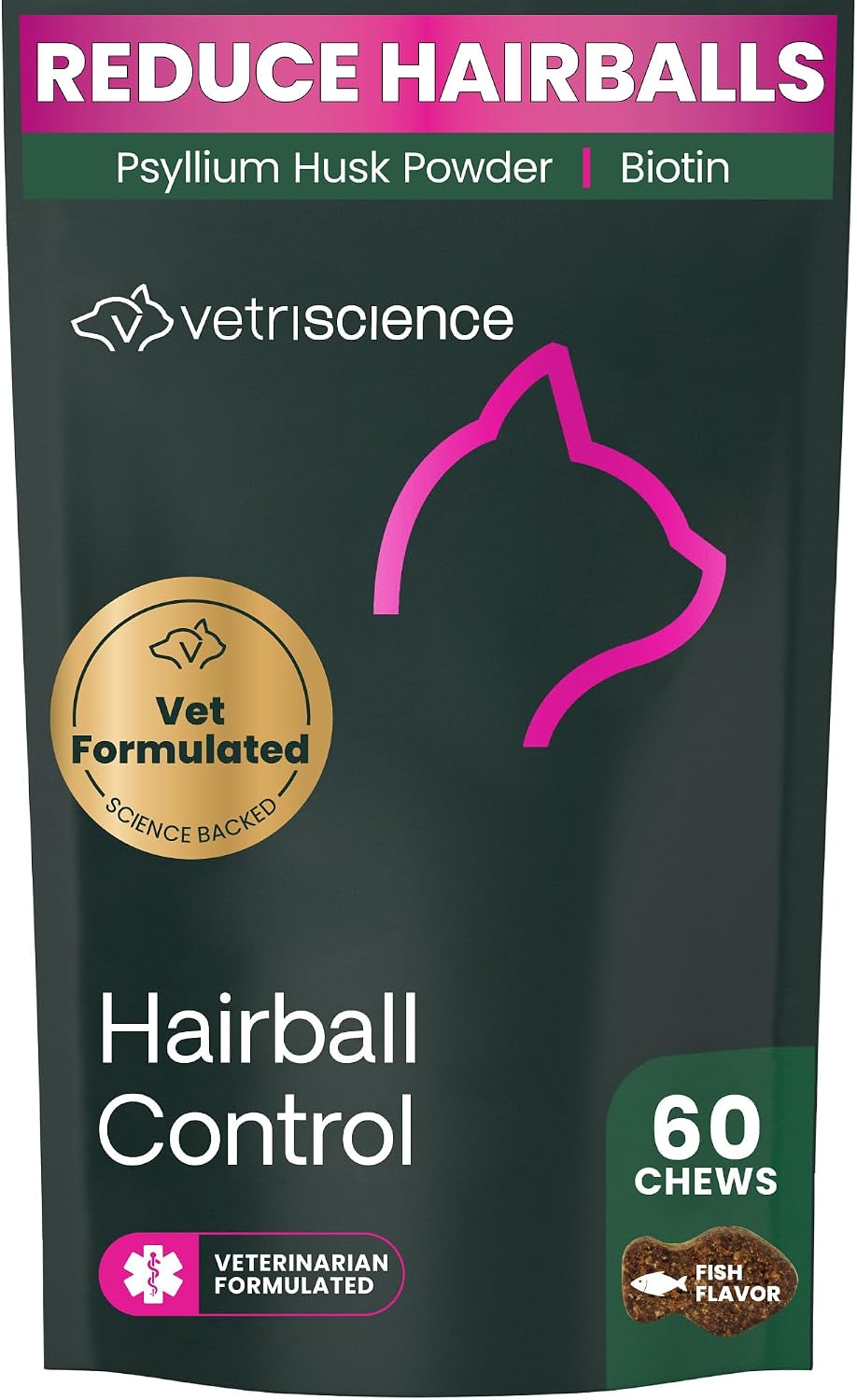
- Price range
- $10.00
3.7/5 from 1,087 Amazon ratings. The fiber route in treat form, and the pick for a cat that also has hard stools. Each chew carries psyllium husk – a soluble fiber that bulks the stool and helps hair move through the colon – plus omega fatty acids, zinc and biotin for coat and skin, and cranberry. They are grain- and gluten-free, chicken liver flavoured and small enough to hand over as a treat rather than a medicine. 60 chews is a two-month supply at one a day.
The 3.7 rating is the lowest here, and complaints cluster around acceptance rather than effect: soft chews go sticky and some cats refuse the second one. Fiber also needs a week or two of consistent use before stools change. If your cat eats them, the price per day is the lowest on the page.
- Pros
- Psyllium fiber, not just a lubricant
- Under $0.17 per day at full dose
- Grain- and gluten-free
- Hand-fed as a treat
- Cons
- Lowest rating here (3.7)
- Sticky texture, mixed acceptance
- Takes 1–2 weeks to show effect
Hairball Buster Powder for Cats, 30 Servings
Best Powder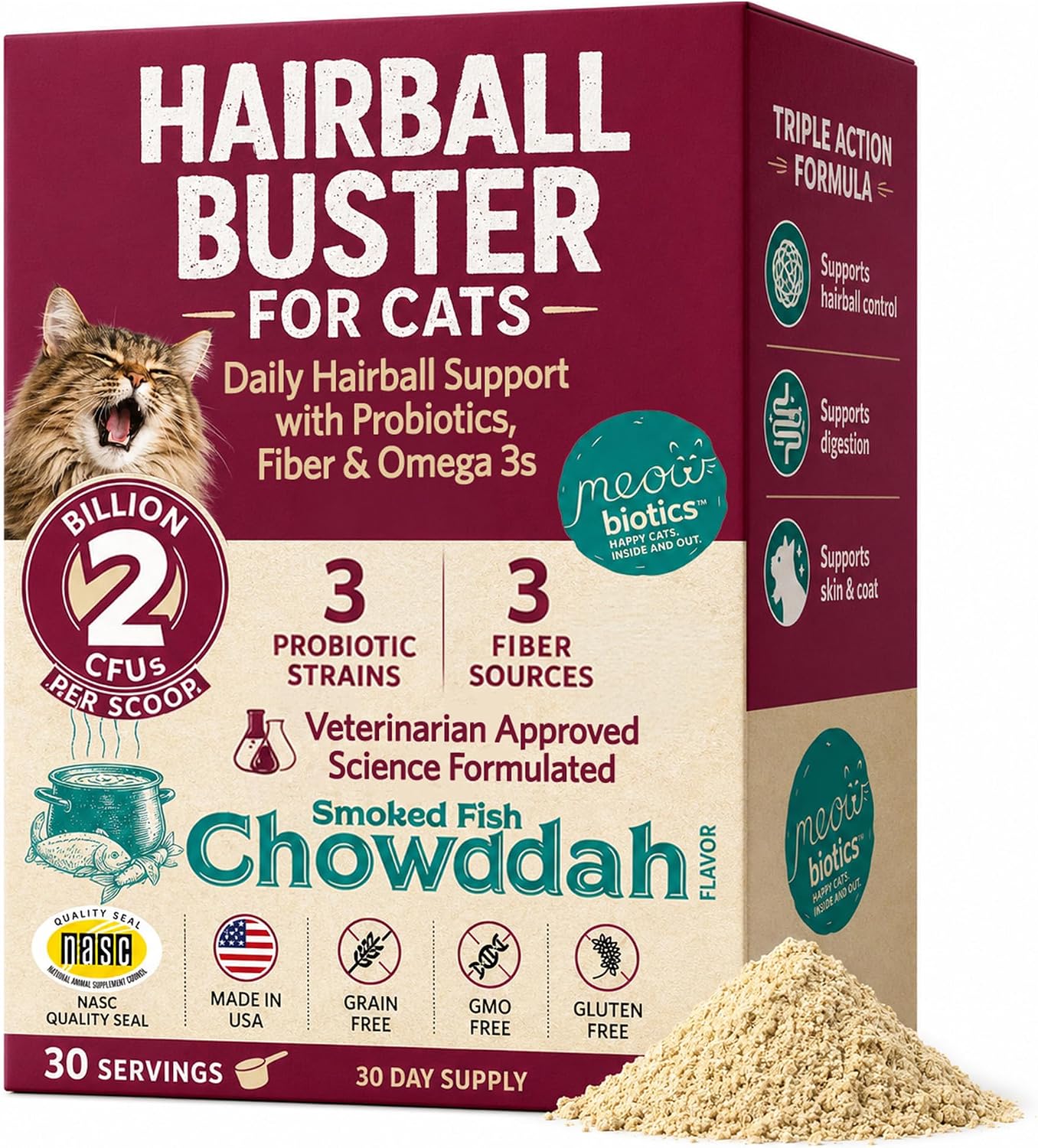
- Price range
- $23.99
4.1/5 from 204 Amazon ratings. The most complete formula here: three fiber sources – psyllium seed, flax seed and inulin – plus 2 billion CFU across three probiotic strains, sold as a smoked-fish-flavoured powder you sprinkle over wet food. That combination targets the two things fiber alone does not: the gut flora that influence stool quality, and the palatability problem that kills most powder supplements.
It is the most expensive per-day option, and powders only work if the cat finishes the bowl – half the food, half the dose. The smoked fish flavour is genuinely liked, which is unusual for a supplement. Treat the "reduces hairball formation" claim as plausible rather than proven: no independent trial backs it.
- Pros
- Three fiber sources in one scoop
- Probiotics included
- Well-liked smoked fish flavour
- Easy to adjust the dose
- Cons
- $23.99 for 30 servings
- Only works if the bowl is finished
- 204 ratings – moderate evidence
Native Pet Hairball Treatment for Cats, 300 Chews
Best Soft Chew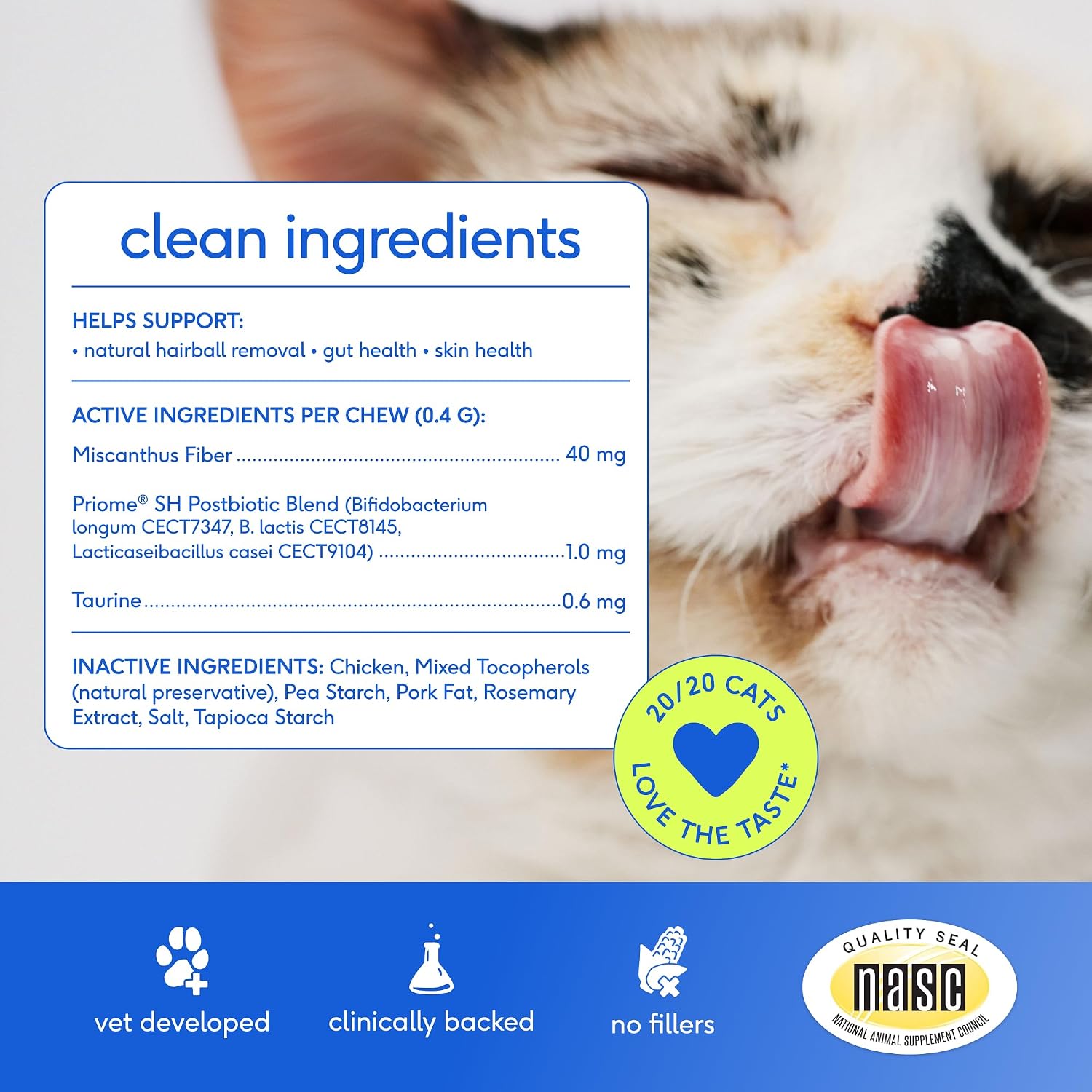
- Price range
- $19.99
4.7/5 from 37 Amazon ratings. The best-rated product here, and the only one with the NASC Quality Seal – an audit programme covering manufacturing and labelling, not efficacy. Vet-formulated by a board-certified nutritionist, made in Spain, dosed at one "pillow" per pound of body weight daily: 10 a day for a 10 lb cat, 300 in the tub, so about 30 days.
Ten small chews a day is a lot of hand-feeding – fine as a treat routine, tedious with a fussy cat. It is also the smallest evidence base here at 37 ratings, so 4.7 is encouraging rather than conclusive. Worth it for the quality seal if you do not mind the counting.
- Pros
- NASC Quality Seal
- Vet-formulated by a board-certified nutritionist
- 4.7/5 – highest rating here
- Soft texture, chicken flavour
- Cons
- One chew per lb of body weight daily
- Only 37 ratings
- Pricier per day than the chews
Hill's Science Diet Adult Urinary & Hairball Control Dry Cat Food
Best Food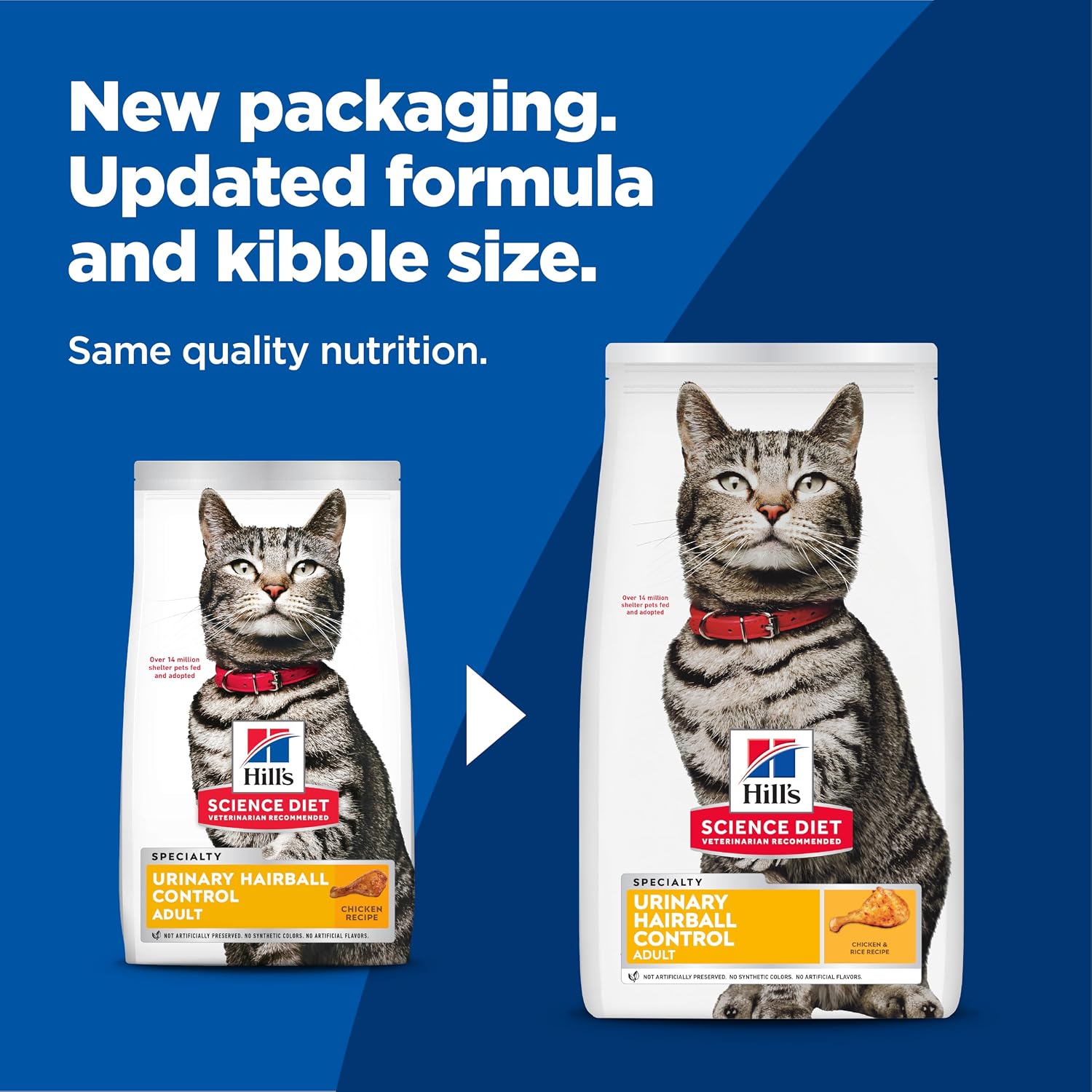
- Price range
- $24.97
4.6/5 from 15,874 Amazon ratings. The no-extra-step option: a complete dry food with a natural fiber blend intended to move hair through the gut, plus controlled minerals for urinary health. Hill's is the brand most US vets stock, and this is one of its highest-volume formulas – 15,874 ratings is a real sample, not a rounding error.
Two limits. It only works as the main diet – useless as a topper – and transitioning takes a week or two of mixing. It is also dry food, which works against you if you are raising water intake; see our hydration guide. The 3.5 lb bag lasts a 10 lb cat about three weeks.
- Pros
- No supplement routine – it is just dinner
- 15,874 ratings at 4.6
- Also supports urinary health
- Widely stocked, easy to rebuy
- Cons
- Only works as the main diet
- Dry food – adds no water
- 3.5 lb bag is short for a big cat
| Product | Type | Active approach | Time to effect | Price | Rating |
|---|---|---|---|---|---|
| Tomlyn Laxatone | Gel | Petrolatum lubricant | 1–2 days | $15.47 | 4.2 (4,147) |
| Hartz Remedy Plus | Paste | Malt + petrolatum | 1–2 days | $8.01 | 4.2 (6,255) |
| VetriScience Chews | Soft chew | Psyllium fiber | 1–2 weeks | $10.00 | 3.7 (1,087) |
| Hairball Buster Powder | Powder | 3 fibers + probiotics | 1–2 weeks | $23.99 | 4.1 (204) |
| Native Pet Treatment | Soft chew | Fiber + lubricant blend | 1–2 weeks | $19.99 | 4.7 (37) |
| Hill's Hairball Control | Dry food | Insoluble fiber diet | 2–4 weeks | $24.97 | 4.6 (15,874) |
Ratings and prices as shown on Amazon on 01.11.2026. Time to effect is a general expectation for the product type, not a tested claim.
How to Use Them Without Making It Worse
- Start with one product, not three. If you add a gel, a powder and a new food in the same week you will not know what worked, and a cat with a sensitive gut will let you know it.
- Dose by weight, not by eyeball. Every product here has a chart. A 14 lb cat needs materially more than a 9 lb cat, and doubling a gel dose causes loose stools.
- Put gels on the paw, not down the throat. Forcing a greasy gel into a cat's mouth risks aspiration into the lungs. A smear on the paw or nose is licked off safely.
- Add water with fiber. Psyllium without enough water can worsen constipation. Wet food, a fountain, or both.
- Brush daily during shedding season. Five minutes with a deshedding tool removes more hair than any supplement can neutralise – see our brush guide.
- Give it four weeks, then judge. Count hairballs in a calendar app; if the number has not moved, change approach, not brand.
When to Stop and Call the Vet
- Unproductive retching – hacking with nothing coming up, especially after meals, can mean an obstruction rather than a hairball.
- Vomiting more than once a month – frequent hairballs are not normal, even in long-haired cats.
- Constipation or no stool for 48 hours – fiber is the wrong tool for a cat that is already blocked.
- Weight loss or a dull coat – over-grooming from pain, fleas or skin disease needs diagnosis, not a supplement.
- Never use human laxatives, mineral oil by syringe or home remedies – human products and forced oils carry real risk of aspiration and electrolyte problems in cats.
Frequently Asked Questions
Are hairballs normal in cats?
Occasional hairballs happen, especially in long-haired cats during shedding season, but they are not a sign of good health. A cat vomiting hair more than about once a month, or retching without producing anything, should see a vet – unproductive retching can mean an obstruction.
Do malt paste and hairball gels actually work?
They help mild cases. Petrolatum and mineral-oil gels lubricate swallowed hair so it passes through the gut instead of coming back up. They do not remove an existing hairball, do not solve over-grooming, and are no substitute for brushing. Most vets treat them as short-term support.
Is fiber or lubricant better for hairballs?
They do different jobs. Fiber adds bulk that moves hair through the colon, which is why psyllium suits cats with constipation or hard stools. Lubricants coat the hair so it slides through. Normal stools: lubricant plus grooming. Constipated: fiber.
Can I use hairball paste on a kitten?
Only on veterinary advice. Most hairball gels are labelled for adult cats, and kittens have different nutritional needs and much smaller doses. Kittens rarely have true hairballs before about six months. If a kitten is retching, treat it as a medical issue rather than a grooming one.
Does hairball-control cat food work?
It can reduce frequency in cats that bring up hair regularly, because the formulas carry more insoluble fiber than standard maintenance food. It is the slowest option and only works if the cat eats it as the main diet. It will not fix a cat that is over-grooming because of stress or skin disease.
Bottom Line
For a cat that brings up a hairball every few weeks but otherwise eats and toilets normally, the Tomlyn Laxatone Tuna Gel is the sensible first buy: lubricant, omega fatty acids, paw dosing and 4,147 ratings. The Hartz paste does the same job for $8.01 if you only want to test the format.
If stools are hard, go the fiber route – VetriScience chews at $10.00 for 60 days, or the Hairball Buster powder for probiotics too. If you would rather change nothing about the routine, Hill's Urinary & Hairball Control has the deepest review base here. Whichever you pick, the brush does more work than the supplement.