Multi-cat feeding is a different sport than single-cat feeding. One cat inhales breakfast in 40 seconds, then parks itself next to the slow eater's bowl. Another grazes all day and gets pushed aside. One needs a prescription diet the other must never touch. The feeder that works beautifully for one cat can quietly cause fights, weight gain, and stolen food in a house with two or three.
The good news: automatic feeders have evolved to handle exactly this. Some recognize each cat by collar tag or microchip and dispense the right portion to the right cat. Others pack enough capacity and bowls for two cats to eat side by side. We analyzed 10 feeders for multi-cat households – per-cat RFID systems, large-capacity WiFi dispensers, and simple budget timers – across 98,000+ verified Amazon reviews. Here's what actually works with more than one cat, and what won't.
| Product | Key Benefit | Price Range | Link |
|---|---|---|---|
| PETLIBRO RFID Multiple Cats Feeder (2-Pack) | Best for Per-Cat Portions | $250–290 (pair) | Check Price |
| PETLIBRO Granary 5L WiFi Feeder | Best Smart Capacity | $80–100 | Check Price |
| Automatic Cat Feeder 4L with Anti-Jam Design | Best Overall | $40–60 | Check Price |
| PETLIBRO WiFi Automatic Cat Feeder for 2 Cats | Best Dual-Bowl WiFi | $80–100 | Check Price |
| Sure Petcare SureFeed Microchip Pet Feeder | Best Microchip / Diet Separation | ≈ $199 | Check Price |
| Automatic Cat Feeder 4L Timed – Multi-Cat Capacity | Best Budget Multi-Cat | $40–60 | Check Price |
| oneisall Dual-Camera Feeder for 2 Cats | Best Budget Smart for 2 Cats | ≈ $100 | Check Price |
| VOLUAS Automatic Cat Feeder 4L | Best Value | $45–65 | Check Price |
| Automatic Cat Feeder 2L – Budget Timed | Best Budget (Single Cat) | $35–50 | Check Price |
| Automatic Cat Feeder 4L Timed – Portion Control | Best Weight Management | $40–60 | Check Price |
Three Ways to Feed Multiple Cats
Before comparing products, it helps to name the three strategies – every multi-cat setup is one of these:
- One feeder, shared food. Both cats eat the same kibble, roughly the same amount, at the same times. Works when cats don't steal from each other and no one needs a special diet.
- One station, per-cat recognition. An RFID or microchip feeder identifies each cat and only opens for the assigned one – each cat gets its own portion of its own food, and theft is physically blocked. This is the category that truly solves "multi-cat" as a problem.
- Multiple feeding stations. Two or more feeders in separate rooms, so each cat effectively gets a single-cat setup. Most expensive and space-hungry, but the most foolproof.
Most multi-cat homes end up with a mix: one big feeder for the cats that get along, plus a selective feeder for the special-needs cat.
How We Selected & Compared
- Data: technical specs from manufacturers (capacity, portion range, per-cat recognition, power, anti-jam, app support)
- Owner satisfaction: aggregated ratings from 98,000+ verified Amazon reviews
- Multi-cat relevance: dual bowls, tag/microchip recognition, per-cat feeding logs, refill frequency
- Long-term reports: recurring complaints about jamming, battery life, app reliability, and cleaning
- Value: price vs. what a multi-cat setup really needs
The 10 Best Automatic Cat Feeders for Multiple Cats
PETLIBRO RFID Multiple Cats Feeder (2-Pack)
Best for Per-Cat Portions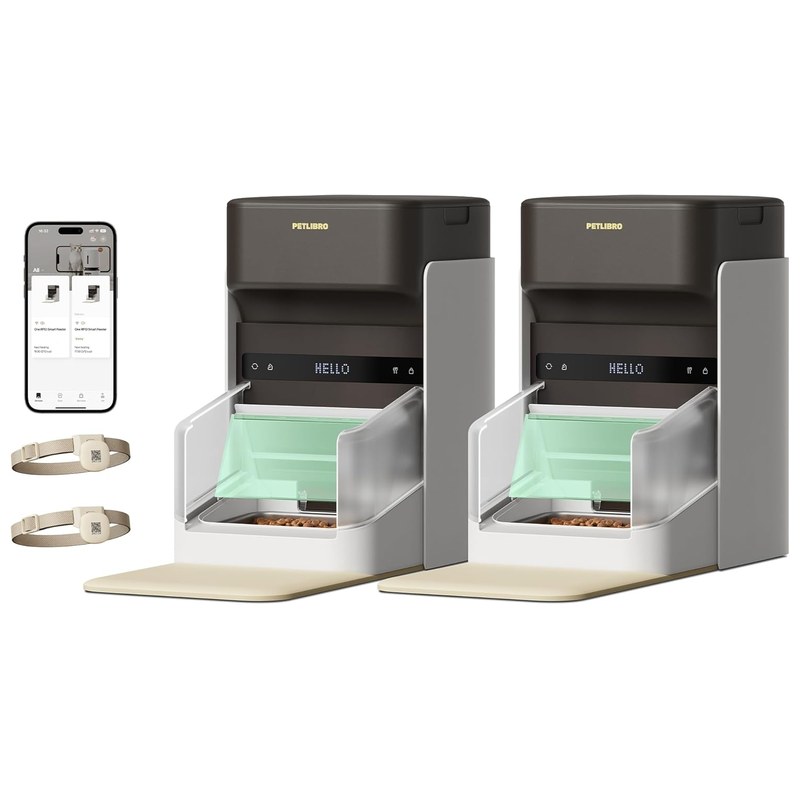
- Type
- RFID per-cat
- Units
- 2 feeders
- Price range
- $250–290 (pair)
★ 4.2/5 from 19,217 verified Amazon reviews. The most direct answer to "feed multiple cats, each their own food": a matched pair of WiFi feeders, each recognizing its assigned cat via an RFID collar tag. The locking lid opens only for the right cat – stopping food theft, the #1 multi-cat complaint – and the app tracks who ate what, when, and how much. Ten meals per day, 48 portions each, dual-band WiFi. Caveats: it works with the included tags only, and the pair price is the highest here.
- Pros
- True per-cat portions and diet separation
- Locking lid physically blocks food theft
- App tracks each cat's eating independently
- Cons
- Most expensive setup here (pair)
- Requires collar tags, not implant-based
- Depends on WiFi and app
PETLIBRO Granary 5L WiFi Feeder
Best Smart Capacity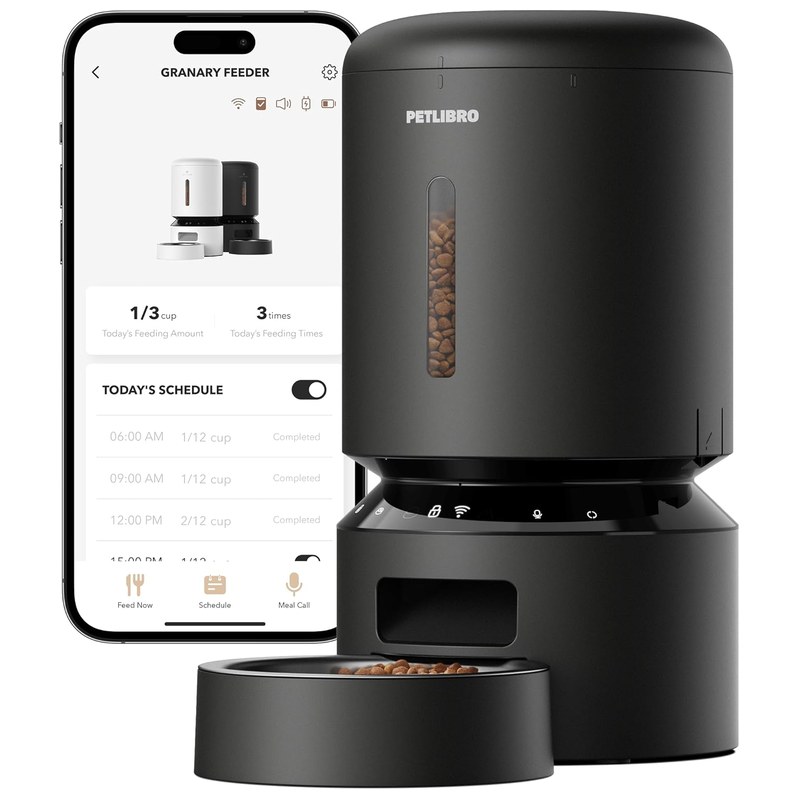
- Capacity
- 5 L
- Meals/day
- Up to 10
- Price range
- $80–100
★ 4.2/5 from 10,414 verified Amazon reviews. The smart pick for two cats that share food: a 5L hopper with up to 10 meals and 48 portions per day, app scheduling, feeding records, and a low-food sensor that pings your phone before the tank runs dry. The sealed, desiccant-protected hopper keeps kibble fresh for weeks. It won't separate diets, but for cats on the same food, this is the most capable single feeder we compared.
- Pros
- 5L capacity – days of food for two cats
- Up to 10 meals and 48 portions per day
- App scheduling, records & low-food alerts
- Cons
- No per-cat recognition – shared diet only
- Needs WiFi for full functionality
Automatic Cat Feeder 4L with Anti-Jam Design
Best Overall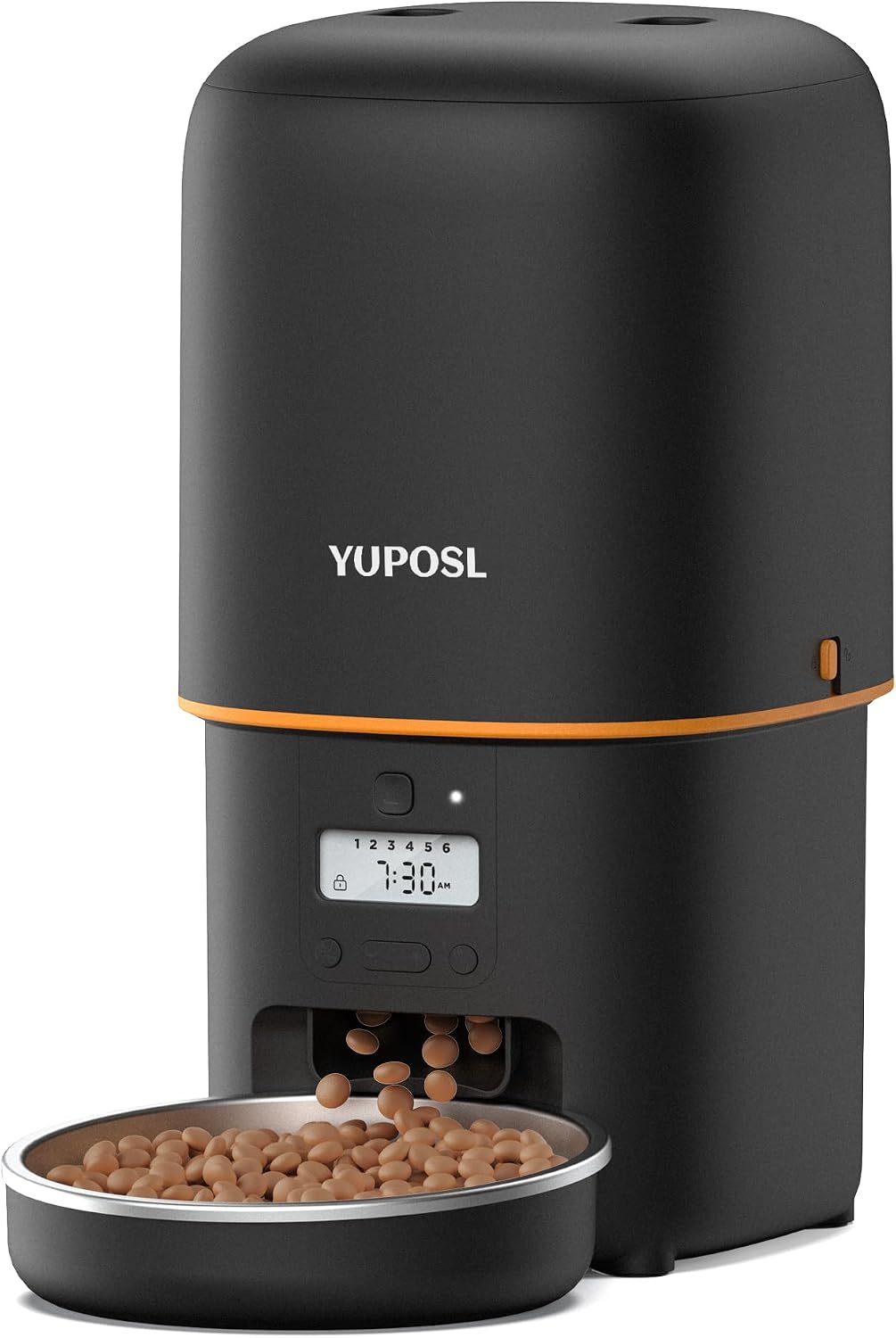
- Capacity
- 4 L
- Features
- Anti-jam
- Price range
- $40–60
★ 4.4/5 from 12,373 verified Amazon reviews. The safest default for a two-cat household on a shared diet: a 4L hopper that covers a week or more for two average cats, anti-jam design that tackles the most common feeder failure, and over 180 days of battery life. The stainless steel bowl resists scratches and cleans easily. It's timed – no app, no WiFi – which many multi-cat owners see as a feature: nothing to set up, nothing to break.
- Pros
- Large 4L capacity for 1–2 cats
- Anti-jam design reduces stuck-kibble failures
- 180+ day battery life, low maintenance
- Cons
- No WiFi/app control – timed only
- No per-cat recognition
PETLIBRO WiFi Automatic Cat Feeder for 2 Cats
Best Dual-Bowl WiFi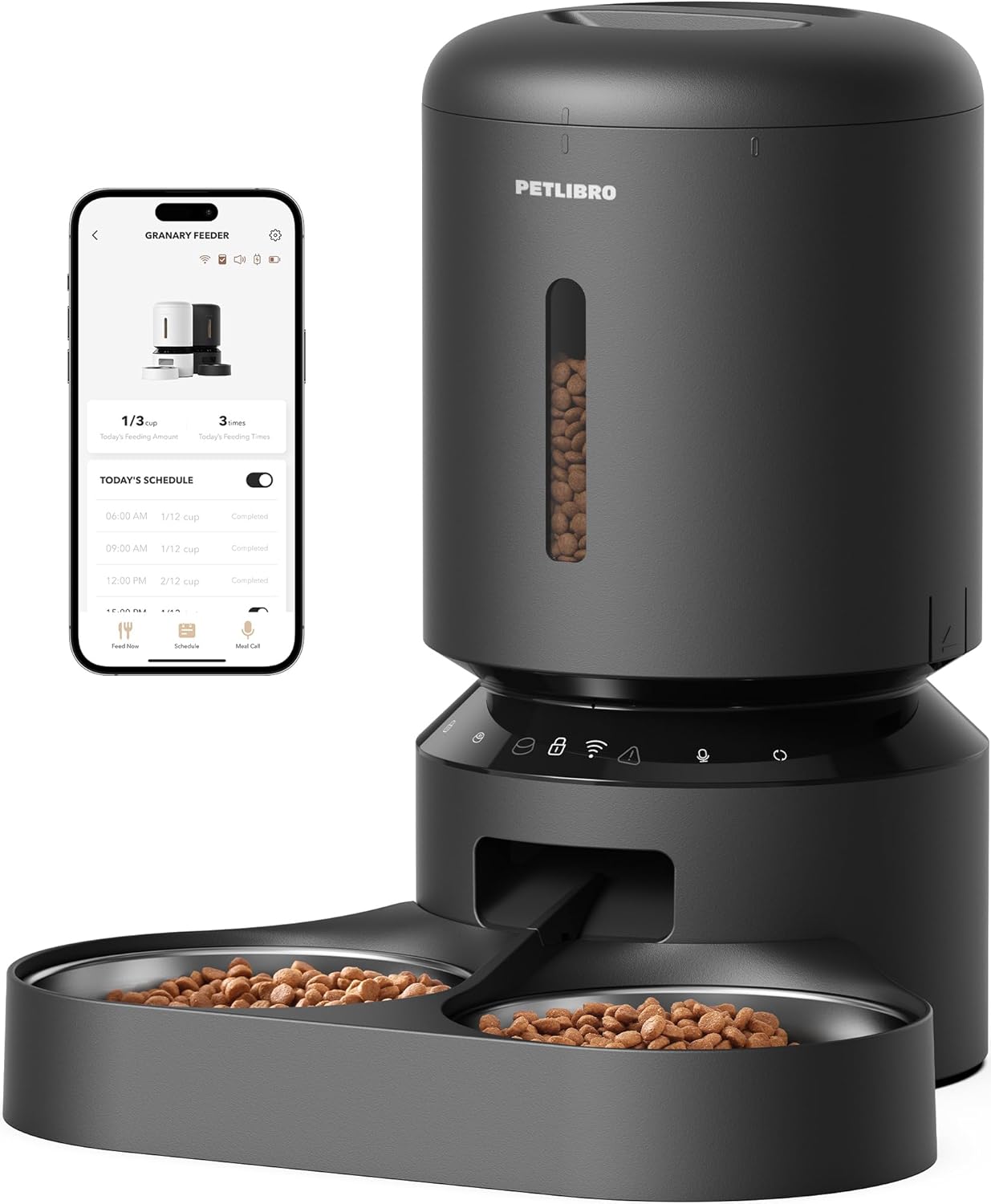
- Capacity
- 5 L
- Bowls
- 2 (stainless)
- Price range
- $80–100
★ 4.0/5 from 10,402 verified Amazon reviews. Built explicitly for two cats: dual stainless steel bowls let both cats eat at the same time without crowding a single dish, and the 5L airtight Lock-Fresh hopper keeps shared kibble crisp between refills. The app schedules over both 5G and 2.4G WiFi, and the low-food sensor warns you before the tank runs dry. The 4.0 rating is the lowest among our top picks, with some owners reporting app quirks.
- Pros
- Dual stainless bowls – both cats eat at once
- 5L capacity with airtight freshness lock
- App scheduling and low-food alerts
- Cons
- No per-cat recognition
- 4.0 rating – app reliability complaints
Sure Petcare SureFeed Microchip Pet Feeder (MPF001)
Best Microchip / Diet Separation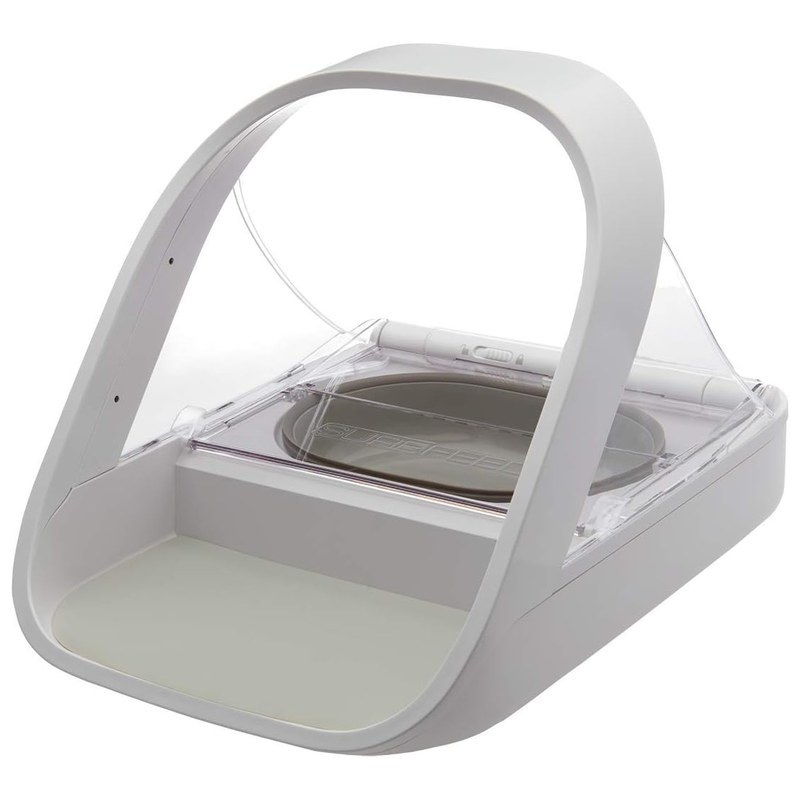
- Type
- Microchip selective
- Food
- Wet or dry
- Price
- ≈ $199
★ 4.2/5 from 13,223 verified Amazon reviews. The classic answer to food theft in multi-pet homes, and the only feeder here that handles wet food. The lid opens only when the assigned cat's microchip (or included collar tag) approaches, and closes when the cat leaves – so the thief gets a closed lid and the diet cat eats in peace. It holds about 13.5 fl oz, stores up to 32 pet IDs, and comes with a three-year warranty. Trade-offs: small capacity and a premium price – buy it for the special-diet cat, not as the main feeder.
- Pros
- Opens only for the assigned cat – stops theft
- Works with implant microchips or collar tags
- Supports wet food; 3-year warranty
- Cons
- Small capacity – frequent refills
- Premium price (~$199), no app
Automatic Cat Feeder 4L Timed – Multi-Cat Capacity
Best Budget Multi-Cat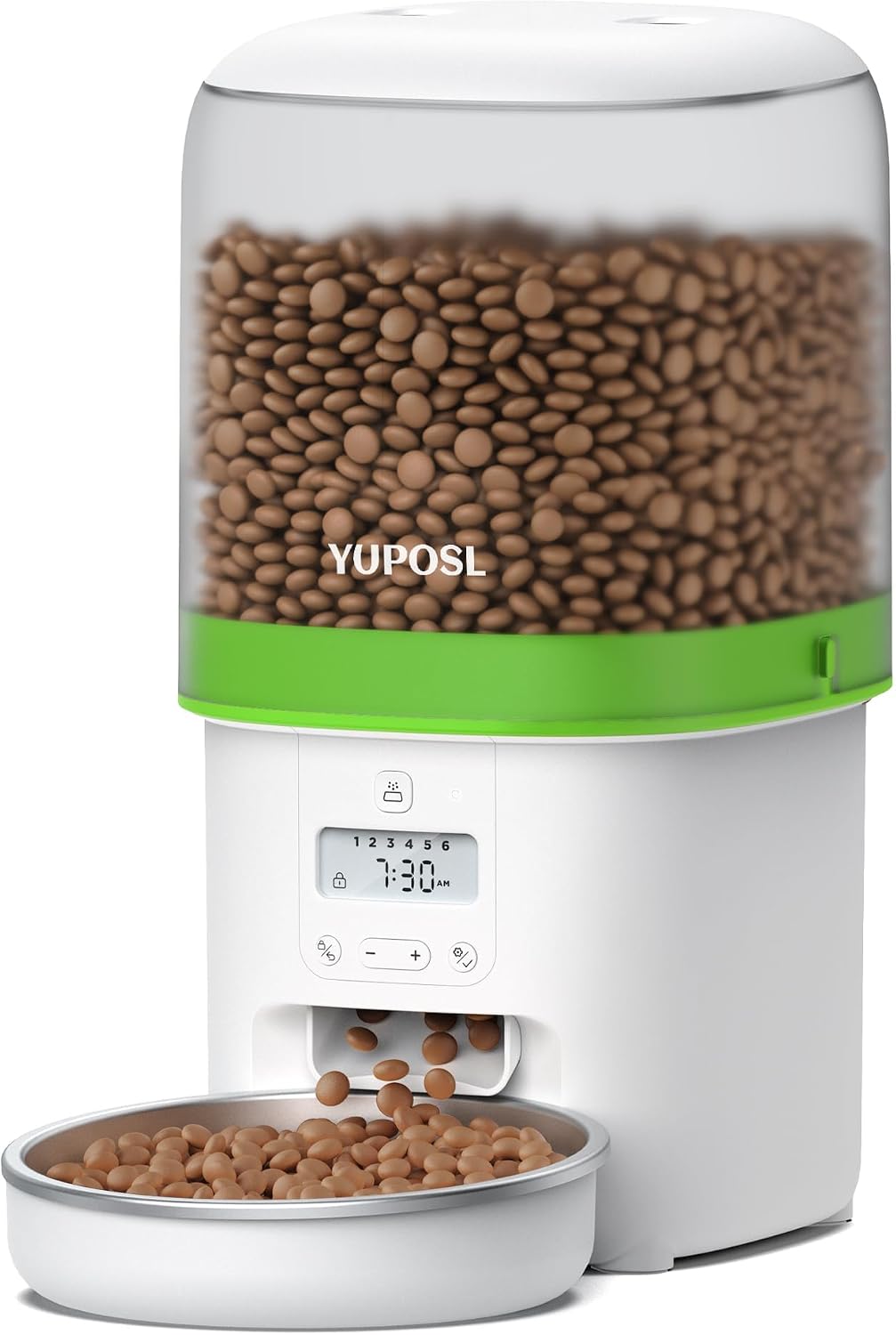
- Capacity
- 4 L
- Features
- Timed
- Price range
- $40–60
★ 4.4/5 from 12,373 verified Amazon reviews. The budget answer to "my cats need more food than a small feeder holds." A 4L timed feeder with flexible programming (1–6 meals per day, 1–16 portions), a 180-day battery, and a desiccant freshness bag. For two cats sharing kibble, the large hopper means refills every 4–7 days. It can't tell cats apart – fine for same-diet cats; mixed-diet households need a selective feeder alongside it.
- Pros
- 4L capacity handles 1–2 cats easily
- 1–6 meals and 1–16 portions per meal
- 180-day battery life, budget price
- Cons
- No WiFi/app control
- No per-cat recognition
oneisall Dual-Camera Feeder for 2 Cats
Best Budget Smart for 2 Cats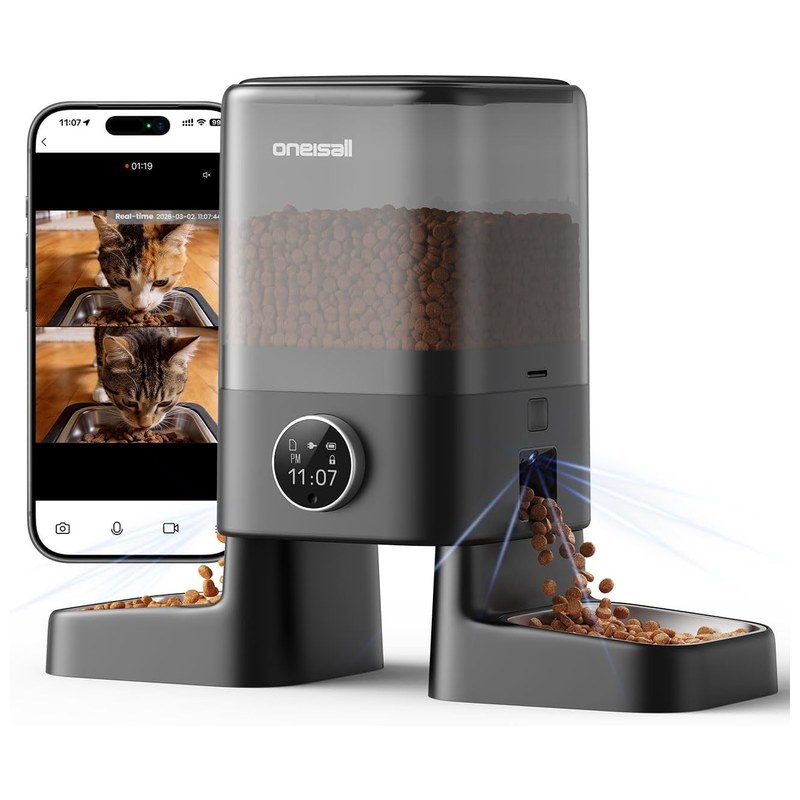
- Capacity
- 5 L (20 cups)
- Bowls
- 2
- Price
- ≈ $100
★ 4.3/5 from 501 verified Amazon reviews. The budget smart setup for two cats: dual bowls positioned 16 inches apart so each cat gets its own space, a 5L tank that feeds two cats for up to 10 days, and two HD cameras with night vision so you can see which cat ate what. The app supports 10 meals a day, precise portions, feeding logs, and motion alerts. It's newer, with a smaller review base than the big names – check recent reviews – but at ~$100 for a dual-bowl camera feeder, the value is strong.
- Pros
- Dual bowls with 16" spacing – calm side-by-side eating
- 5L capacity for two cats; two cameras
- Attractive price (~$100)
- Cons
- Small review base (501) – newer product
- No per-cat recognition – shared diet only
VOLUAS Automatic Cat Feeder 4L with Voice Recorder
Best Value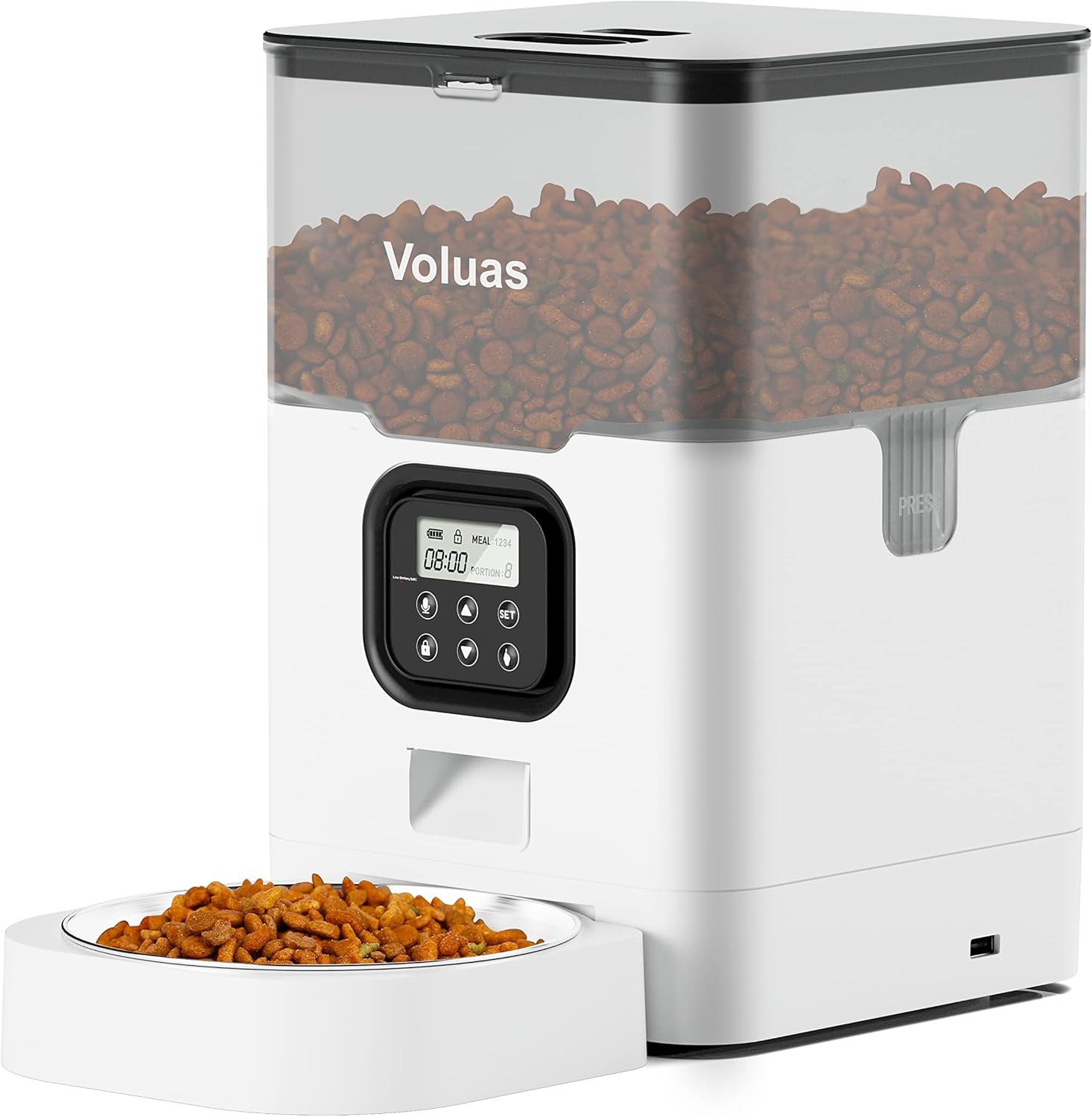
- Capacity
- 4 L
- Price range
- $45–65
★ 4.4/5 from 2,962 verified Amazon reviews. The value pick for a two-cat household on a budget: a 4L timed feeder with programmable portions at a mid-range price. It runs on dual power with power-off memory, so its schedule survives outages. The 10-second voice recorder calls both cats to dinner, which owners report cats learn to respond to. Honest limit: 4 meals a day max is the lowest cap here.
- Pros
- Great price for a 4L feeder
- Dual power supply + power-off memory
- Voice recorder – call cats to meals
- Cons
- Max 4 meals/day (others do 6–10)
- No WiFi, app, or per-cat recognition
Automatic Cat Feeder 2L – Budget Timed Feeder
Best Budget (Single Cat)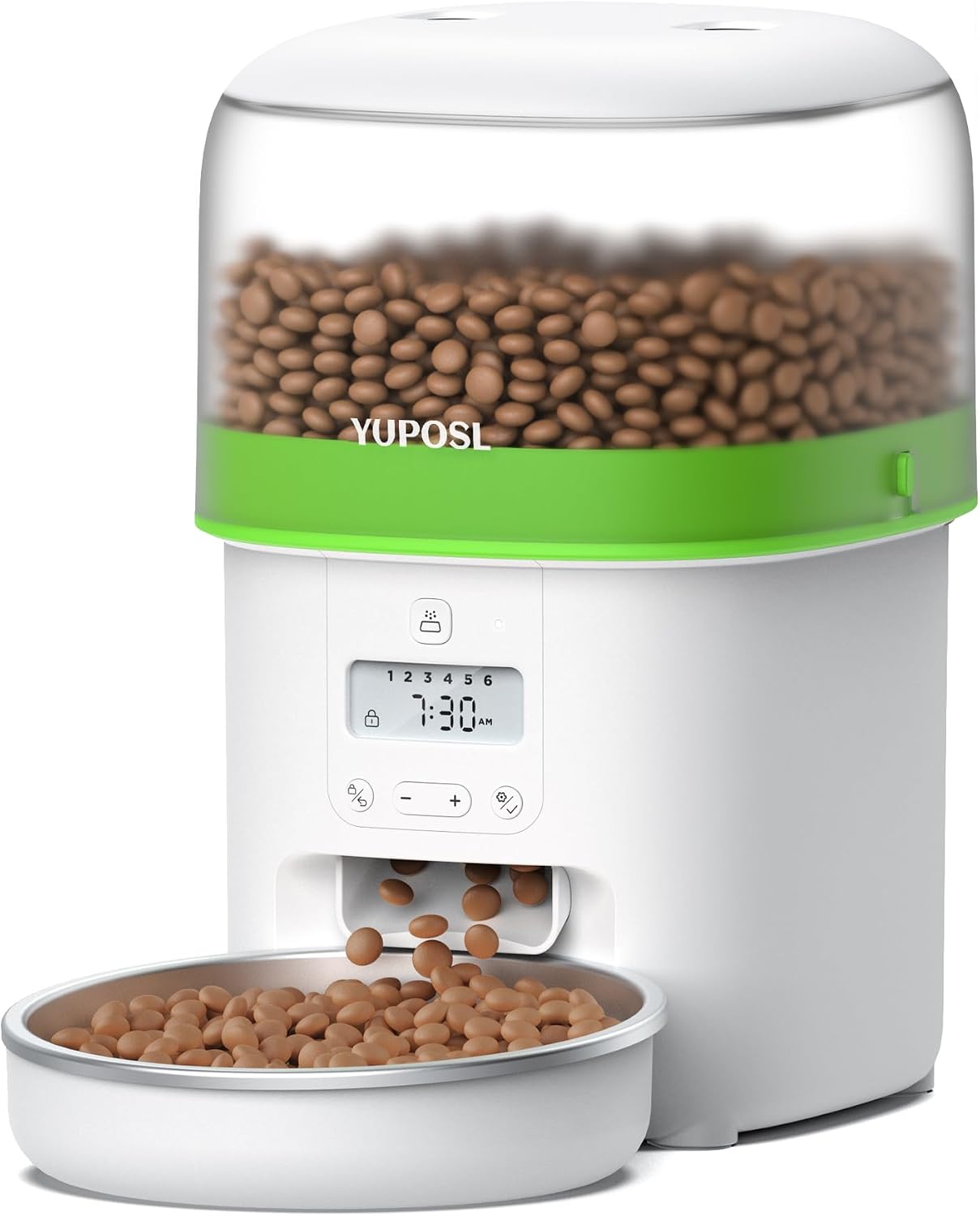
- Capacity
- 2 L
- Features
- Timed
- Price range
- $35–50
★ 4.4/5 from 5,156 verified Amazon reviews. In a multi-cat context, this one earns its place as the second feeder: a cheap, reliable timed dispenser you can put in another room to create a second feeding station without spending big. The 2L hopper (1–2 weeks for one cat) and flexible programming (1–6 meals, 1–16 portions) match far pricier feeders, with a claimed 180-day battery. As a primary feeder for two cats it's too small – but as a budget second station, it's a low-risk buy.
- Pros
- Lowest price in our lineup
- 180-day battery life
- Good as a second feeding station
- Cons
- 2L capacity – too small as the main feeder for 2 cats
- No WiFi/app control
Automatic Cat Feeder 4L Timed – Portion Control Specialist
Best Weight Management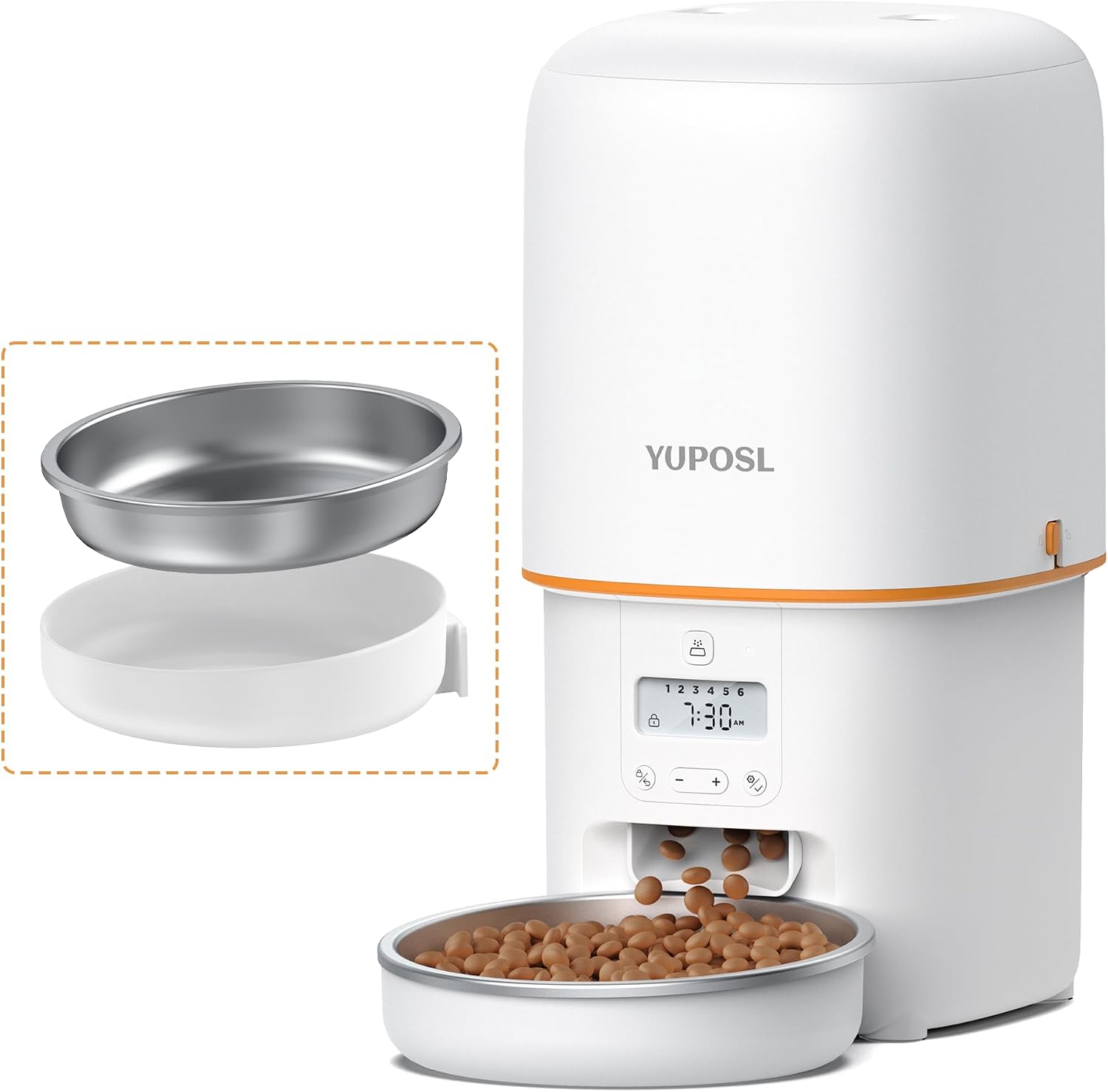
- Capacity
- 4 L
- Features
- Timed
- Price range
- $40–60
★ 4.4/5 from 12,373 verified Amazon reviews. The pick when at least one cat is fighting the bulge – common in multi-cat homes, since free-feeding lets the greedy cat get greedier. It delivers the widest useful portion range in the budget class – 1–16 portions per meal, up to 6 meals a day – so you can enforce a vet-approved daily allowance per feeding station. Pair it with a second feeder to run two calorie budgets in one house.
- Pros
- Fine-grained 1–16 portion control
- Up to 6 small meals per day
- Great for per-station calorie budgets
- Cons
- No WiFi/app control
- No per-cat recognition
Comparison Table
| Model | Price | Capacity | Per-Cat ID? | Best for |
|---|---|---|---|---|
| PETLIBRO RFID 2-Pack (B0D965XQML) | $250–290 | 2 × 3L class | Yes (RFID tags) | Per-cat portions & diets |
| PETLIBRO Granary 5L (B09S8WMJY9) | $80–100 | 5L | No | Smart capacity, shared diet |
| 4L Anti-Jam (B0C5JVM68Q) | $40–60 | 4L | No | Overall / shared diet |
| PETLIBRO WiFi 2 Cats (B0D44QYZ7Z) | $80–100 | 5L | No | Dual bowls, smart |
| SureFeed Microchip (B00O0UIPTY) | ≈ $199 | 13.5 fl oz | Yes (microchip) | Wet food / diet separation |
| 4L Timed Multi-Cat (B0DHVHHZLY) | $40–60 | 4L | No | Budget, shared diet |
| oneisall Dual-Cam 2 Cats (B0GFDH3WD5) | ≈ $100 | 5L | No | Budget smart, dual bowls |
| VOLUAS 4L (B09N6SX5ZD) | $45–65 | 4L | No | Value / power backup |
| 2L Budget (B0D5Y1HSN4) | $35–50 | 2L | No | Second feeding station |
| 4L Portion Control (B0C2J9C8R1) | $40–60 | 4L | No | Weight management |
How to Choose an Automatic Cat Feeder for 2+ Cats
Step 1: Decide whether cats need separate diets
This one question determines everything. If all cats eat the same kibble in similar amounts, a large shared feeder (4–5L) or a dual-bowl model is all you need – spend on capacity and reliability. If one cat is on a prescription diet, gets medication in food, or is on a strict weight plan, you need per-cat recognition (RFID tags or microchip) or separate stations in separate rooms. A diet cat with free access to shared food is how prescription diets quietly fail.
Capacity math for two cats
A typical adult cat eats roughly 1.5–2 cups of dry food a day. Two cats clear a 4L hopper in about 1–2 weeks and a 5L hopper in up to 2+ weeks; the oneisall's manufacturer quotes up to 10 days for two cats on its 5L tank. If you travel or hate refilling, size up. The 2L models are single-cat territory – fine only as a second station.
RFID vs. microchip: what's the difference?
Both open for one cat and close for the others, but they read different identifiers. RFID collar-tag feeders (PETLIBRO RFID) use a tag clipped to the collar: easy setup, but the tag can be lost and the cat must wear the collar. Microchip feeders (SureFeed) read the implant your vet already inserted – nothing to lose – but check chip compatibility (SureFeed supports 9-, 10-, and 15-digit chips). Either works; the chip version is the more permanent solution.
Portion control per cat
Even when cats share a feeder, portion granularity matters. Look for a wide portion range (1–16 or 1–48 per meal) and enough meals per day to split the daily ration into 2–4 servings. With cats of different sizes, fine-grained models let one feeder serve both – more portions for the big cat, fewer for the small – as long as the greedy one doesn't steal the surplus.
Anti-jam, power, noise, cleaning
Jamming is the #1 complaint across feeder reviews, and it compounds with multiple cats because the feeder works harder and empties faster – prioritize anti-jam design or infrared blockage detection, and check kibble-size guidance for your food. Most feeders here claim 180-day battery life; the VOLUAS adds plug-in power with power-off memory so its schedule survives outages. The dispensing sound matters too: bold cats sprint to it, shy cats learn to wait – introduce the feeder gradually. Plan a full clean every 2–4 weeks; stainless steel bowls resist scratches better than plastic.
What Doesn't Work for Multi-Cat Households
- One single-bowl feeder with different diets. If one cat needs prescription food, a shared bowl undoes the diet. Recognition tech or separate rooms are non-negotiable.
- Free-feeding with a greedy cat. A full bowl down all day is how the fast eater gets fat and the slow eater gets pushed away. Scheduled portions are the point of the exercise.
- Wet food in a kibble feeder. Wet food spoils in the hopper and clogs the auger. For wet-food plans, feed manually or use a wet-food-capable selective feeder like the SureFeed.
- The cheapest feeder under heavy load. A two-cat household cycles a feeder twice as often. The flimsiest budget models show jams and wear faster – read recent reviews before saving $15.
- Assuming a feeder replaces supervision. Feeders handle portions and timing, not resource-guarding or medical issues. If cats fight over food or one stops eating, talk to your vet.
FAQ
Can one automatic feeder feed multiple cats?
Yes, if the cats share a diet and eat at the same time. A single feeder with a large capacity (4–5L) can serve two cats, and dual-bowl models like the PETLIBRO WiFi feeder for 2 cats let both eat at once. What a single feeder can't do is tell cats apart – if one cat needs a prescription diet or portion limit, you need per-cat recognition (RFID or microchip) or separate feeders.
Do I need one feeder per cat?
Not always. Two cats that eat the same food and similar amounts can share one large feeder or one dual-bowl feeder. You need separate feeding stations when diets differ, when one cat is a food thief, or when portions must be strictly controlled per cat – that's where RFID collar-tag feeders (like the PETLIBRO RFID 2-pack) or microchip feeders (like the SureFeed) earn their price.
Are microchip feeders worth it for multi-cat homes?
For the specific problem they solve – keeping one cat's food away from the others – yes. A microchip feeder like the SureFeed opens only for the assigned cat's microchip or collar tag, which stops food stealing and lets you feed a prescription diet without locking anyone away. They're pricey (about $199), so most homes need one only for the cat with special dietary needs.
How do RFID collar-tag feeders work for multiple cats?
Each cat wears a lightweight RFID tag on its collar. The feeder recognizes the tag when the assigned cat approaches, opens for that cat, and stays closed for everyone else. Systems like the PETLIBRO RFID feeder track per-cat eating in the app – who ate, when, and how much – exactly the data you need when two cats are on different diets or weight plans.
What is the best way to stop one cat from eating another cat's food?
In order of reliability: (1) feed in separate rooms with doors closed, (2) use a microchip or RFID feeder that only opens for the right cat, (3) use a dual-bowl feeder so both cats eat at once in a supervised spot. Supervised meal times with the food picked up afterward remain the most reliable method of all – a feeder is a tool, not a cat sitter.
Bottom Line
For two cats that share a diet, the PETLIBRO Granary 5L is the smartest single solution, and the 4L Anti-Jam Feeder remains the dependable budget default. For households where cats need different food or portions, the PETLIBRO RFID 2-Pack is the strongest per-cat system we found, with the SureFeed Microchip Feeder as the proven choice for one cat on a special diet.
Whatever your setup: decide first whether your cats can share food, then match the strategy – shared big feeder, per-cat recognition, or separate stations – and prioritize anti-jam reliability and portion control. Get that right, and meal times stop being a daily negotiation.